The five best historical sites in the UAE are the Al Fahidi Historical Neighbourhood in Dubai, Qasr Al Hosn in Abu Dhabi, Al Jahili Fort and Hili Archaeological Park in Al Ain, and Dhayah Fort in Ras Al Khaimah. Most are free or cost under AED 30, and together they cover about 4,000 years of history.
The UAE has a reputation for glass towers, but the older layers are easy to find if you know where to look. We picked these five because each one is open to visitors, easy to reach by car or taxi, and shows a different period: Bronze Age burial, pearl-diving Dubai, fortified Al Ain and the Gulf coast conflicts of the early 19th century. Opening hours at heritage sites change around Ramadan and public holidays, so confirm before you travel. Prices below are approximate, as of 2026.
Historical sites in the UAE at a glance.
| Quick facts | What to know |
|---|---|
| Sites | Al Fahidi (Dubai), Qasr Al Hosn (Abu Dhabi), Al Jahili Fort and Hili (Al Ain), Dhayah Fort (Ras Al Khaimah) |
| Typical cost | Most are free or cost under AED 30 |
| History covered | About 4,000 years |
| Qasr Al Hosn ticket | About AED 30 for adults as of 2026 |
| Al Ain drive | About 90 minutes by road from Dubai and from Abu Dhabi |
| Hili visit time | About 45 minutes |
1. Al Fahidi Historical Neighbourhood, Dubai
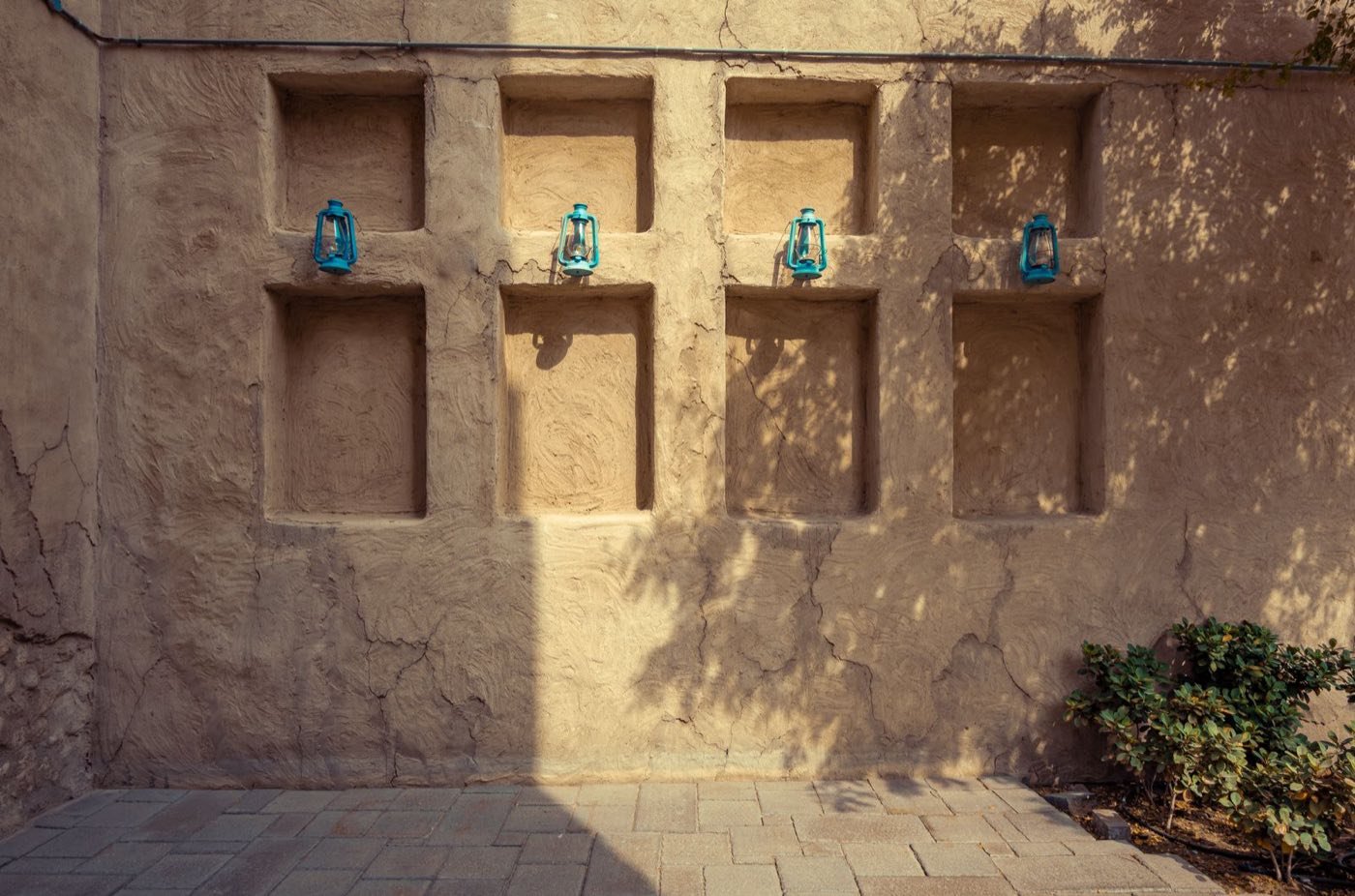
Al Fahidi (also called Bastakiya) is the best place in Dubai to see what the city looked like before oil. Narrow lanes run between sandstone and coral-stone houses, many topped with wind towers that caught sea breezes and pushed them down into the rooms below. Several courtyards now hold galleries and cafes, and the area is free to walk at any time.
- How to get there: Take the Green Line metro to Al Fahidi station, then walk about five minutes. See our Dubai metro guide.
- Cost: Free to wander. The Dubai Museum inside Al Fahidi Fort has historically charged around AED 3 as of 2026.
- Best time: Early morning from November to March, before the lanes warm up and the tour groups arrive.
- Link it with: An abra crossing of the Creek, covered in our Dubai Creek guide, and the Gold Souk on the Deira side.
Local tip: Walk the lanes before 10am. The light is better for photographs and the heat is easier to manage. Book a guided Dubai Creek and old town walk if you want the history explained house by house.
2. Qasr Al Hosn, Abu Dhabi
Qasr Al Hosn is the oldest stone building in Abu Dhabi. It began in the 18th century as a watchtower guarding the island’s freshwater well and grew into the fort and palace from which the ruling Al Nahyan family governed. After a long restoration it now operates as a museum and cultural centre in the middle of the city, with exhibitions on the emirate’s pre-oil life.
- How to get there: It sits on the edge of Al Hosn in central Abu Dhabi, a short taxi ride from most downtown hotels. See our Abu Dhabi city hub.
- Cost: About AED 30 for adults as of 2026. Reported hours are Saturday to Thursday 9am to 8pm and Friday from 2pm, but hours vary by source, so check before going.
- Best time: Weekday mornings. Friday afternoon is the busiest slot because the opening window is shorter.
- Link it with: Qasr Al Watan and the Grand Mosque, both covered in our Abu Dhabi things to do guide. You can also browse Abu Dhabi tours for a guided day.
3. Al Jahili Fort, Al Ain
Al Jahili Fort is the most impressive fort in the UAE to walk through. It dates to the late 19th century (sources give 1889 to 1891) and was built to protect the oasis settlements and date palm groves of Al Ain. The courtyard, round towers and crenellated walls are well preserved, and an exhibition inside covers the explorer Wilfred Thesiger and his travels across the Empty Quarter.
- How to get there: Al Ain is about 90 minutes by road from Dubai and 90 minutes from Abu Dhabi. Our Al Ain city hub covers routes and where to base yourself.
- Cost: Free for most visitors as of 2026, with hours commonly listed as 9am to 7pm. One listing gives a small fee, so confirm on arrival.
- Best time: Late afternoon, when the stone turns gold and the courtyard is in shade.
- Link it with: Al Ain Oasis next door, and Jebel Hafeet for sunset.
Local tip: Visit the fort first, then walk into the oasis. The palm groves are 10 to 15 degrees cooler than the car park in summer.
4. Hili Archaeological Park, Al Ain
Hili is where the UAE’s deep past is visible. The park protects Bronze Age tombs and settlement remains, and its centrepiece, the Hili Grand Tomb, is about 4,000 years old and roughly 12 metres across, with carved human and animal figures at the entrances. The site belongs to the Cultural Sites of Al Ain, which UNESCO inscribed in 2011 (see the Abu Dhabi culture page on the Hili sites).
- How to get there: About 10 km north of central Al Ain. A taxi or rental car is easiest. Read our car rental guide if you plan to drive between sites.
- Cost: Free or a token fee as of 2026. Hours are listed inconsistently across guides, and some give an evening-only window, so check before you go.
- Best time: Evening, when the park is cooler and the stone is lit.
Allow about 45 minutes. Combine Hili with Al Jahili Fort for a single Al Ain heritage day, and see our Al Ain things to do page for lunch and oasis options.
5. Dhayah Fort, Ras Al Khaimah
Dhayah Fort is the only hilltop fort on the UAE coast that you can climb. It sits on a ridge between the mountains and the sea, about 18 to 20 km north of Ras Al Khaimah city, and dates to the early 19th century. It is linked to the 1819 clashes between the local Qasimi fleet and British forces (according to Visit Jebel Jais). The climb is roughly 200 to 240 steps depending on the source, and the view over date plantations and the Gulf is the reward.
- How to get there: Drive or take a taxi from Ras Al Khaimah city, about 20 minutes. Public transport is limited.
- Cost: Free as of 2026, with a sign-in at the base of the hill.
- Best time: Early morning or late afternoon from November to March. Take water and sturdy shoes.
- Link it with: The National Museum of Ras Al Khaimah and Jebel Jais. Our Ras Al Khaimah city hub has the full picture, and RAK tours cover the main stops.
Which historical sites to pick
If you only have one day, choose Al Ain: the fort and Hili together are the strongest history day in the country. If you are based in Dubai, Al Fahidi is easy to add to any itinerary. For a short city break in the capital, Qasr Al Hosn pairs well with the Abu Dhabi 3-day itinerary. On the east coast, Fujairah Fort and Al Bidyah Mosque, covered in our Fujairah guide, are worth adding if you are driving that way.
Practical tips
- Dress modestly. Shoulders and knees covered at all sites, and see our dress code guide.
- Carry cash. Small entry fees and parking at smaller sites are not always card-ready.
- Hire a driver for Al Ain. A day of taxis between the fort, Hili and the oasis adds up, so compare it with a rental car or a guided tour.
- Check Ramadan hours. Several sites close earlier or reopen in the evening during Ramadan.