Abu Dhabi Food Tours: Corniche, Al Mina, and Emirati Cuisine
Book an experience
Book this activity
These are the top-rated activities for this area — book ahead to lock in your preferred date.
Abu Dhabi’s food culture is less well-documented than Dubai’s and more genuinely Emirati for it. The capital has not had Dubai’s decades of restaurant-scene marketing, and that’s an advantage for the curious visitor. The cooking at Al Mina’s market stalls is the same cooking that fed pearl divers and Bedouin traders a century ago — slow-cooked, simply spiced, built on rice, fish, and dates. A guided food tour is the clearest way into a city whose culinary identity doesn’t come with a PR campaign.
Abu Dhabi vs Dubai for Food Tours
The comparison is worth making because visitors often choose between the two cities for a food-focused half-day. Dubai offers more variety and the dramatic backdrop of Old Dubai’s heritage lanes. Abu Dhabi offers more depth of Emirati cooking and access to Al Mina — a working harbour market that has no equivalent in Dubai’s tourist infrastructure.
Dubai food tours are more polished and more heavily reviewed; Abu Dhabi tours are less crowded and tend to feel more like a genuine local experience. For anyone spending a day in Abu Dhabi, the combination of Al Mina in the morning and a Corniche restaurant for lunch is hard to match anywhere else in the Gulf.
The Best Abu Dhabi Food Tour Operators
Frying Pan Adventures runs Abu Dhabi food tours alongside their more famous Dubai operations. Their Abu Dhabi tours typically cover Al Mina, the old souk area, and the Corniche district over approximately three hours with 10–14 tastings. Group tours cost approximately AED 370–420 per person (as of 2026). Booking is through their website or GetYourGuide; groups cap at 10 people.
Abu Dhabi food tour operators on GetYourGuide offer more varied options, from morning market walks focused on Al Mina to evening Corniche food crawls combining Lebanese, Emirati, and Iranian cuisines. Prices start from approximately AED 295–350 per person for group tours. As with all tour platforms, read reviews from the past three months — guide quality varies more than operator reputation suggests.
Private guides can be arranged through concierge desks at the larger Corniche hotels. A private half-day food and culture tour typically costs AED 700–1,100 per person for groups of two or more. Useful if you have specific dietary requirements or a tight schedule.
Browse all currently available Abu Dhabi food tours and culinary walks on GetYourGuide.
The Abu Dhabi Food Walk: Area by Area
Al Mina: The Old Harbour Markets
Al Mina — meaning “the port” in Arabic — is Abu Dhabi’s original commercial district, built around the harbour that served the emirate’s fishing and pearl diving economy before oil. The markets here are still working markets, not heritage reconstructions.
Al Mina Fish Market opens daily from approximately 05:00 and peaks between 06:00 and 09:00 when the overnight catch is sold. The market sells everything from the Arabian Gulf’s abundant hammour (grouper) and kingfish to tiger prawns, lobsters, and the occasional tuna. Retail prices are approximately 30–50% below supermarket rates. The market will clean and prepare fish for a small additional fee. Even if you’re not buying, the scale and activity of an early morning fish market — whole yellowfin tuna in ice, crates of silver bream, Iranian fishermen negotiating with restaurant buyers — is worth arriving early for.
Al Mina Fruit and Vegetable Market sits adjacent to the fish market and reflects Abu Dhabi’s supply chain in concentrated form: dates from Saudi Arabia, mangoes from Pakistan, pomegranates from Iran, okra from Egypt, bitter melon from India. The date display alone — dozens of varieties from the amber and soft kholas to the firm and dry khalas — shows how deeply the Gulf’s culture is built around this single fruit. Date varieties you won’t see in European supermarkets include the fresh medjool-style bateel, the almost toffee-sweet lulu, and the dark, intensely sweet khasab.
Good guides use Al Mina to explain UAE import dependency — the country grows very little of what it eats and has built a logistics infrastructure to bring food from 40 countries to a population of 10 million in a desert with almost no farmable land outside the Al Ain oasis.
The Old Abu Dhabi Souk Area
The district around the Heritage Village and the older souk buildings near Al Mina has a concentration of Iranian bakeries, traditional coffee shops, and small restaurants that mostly serve the South Asian and Iranian communities who have worked in Abu Dhabi for generations.
Khubz Tannour — flatbread from a wood-fired clay oven — is best bought fresh from one of the bakeries around the souk area. Approximately AED 2–4 per large sheet. Still warm from the oven, it’s best eaten immediately with hummus or alongside a cup of tea.
Iranian restaurants in this area serve ghormeh sabzi (a slow-cooked herb and kidney bean stew), joojeh kebab (saffron-marinated chicken), and zereshk polo (barberry rice with golden raisin), all for approximately AED 35–60 per main. Iran’s culinary influence on Abu Dhabi is pervasive and often underacknowledged — saffron, dried limes (loomi), rose water, and pomegranate molasses all entered Emirati cooking through Persian trade.
The Corniche District
The Abu Dhabi Corniche is an 8-kilometre waterfront promenade lined with restaurants, cafés, and hotels. The food here skews more upscale than the Al Mina markets, but the Corniche also has several excellent Lebanese restaurants that represent some of the best food in the city.
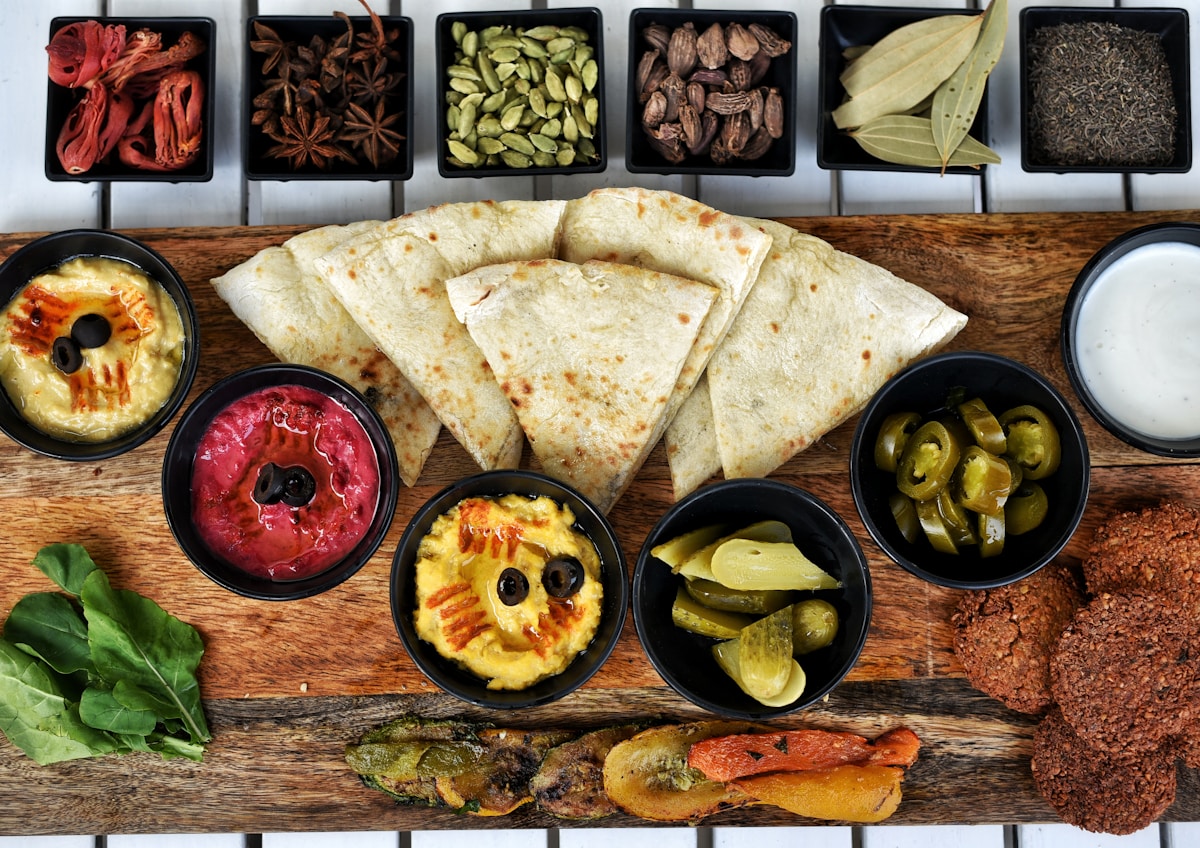
Lebanese mezze — the spread of small plates that functions as both starter and social ritual — is the food most visitors find easiest to navigate in Abu Dhabi. A full mezze spread at a mid-range Corniche restaurant costs approximately AED 150–250 for two people and includes hummus, moutabal (aubergine dip), fattoush salad, falafel, labneh, kibbeh (fried bulgur wheat croquettes filled with minced lamb), and warm pita. The variety and freshness is consistently higher than the same food in European Lebanese restaurants, primarily because ingredients like parsley, mint, and tomato arrive daily rather than pre-prepped two days ago.
Seafood on the Corniche: Several restaurants serve fresh fish from Al Mina prepared simply — grilled with lemon and olive oil, or in a spiced chermoula sauce — at approximately AED 80–140 for a main course. The quality of the catch is directly traceable to the market seen earlier in the morning, which is a pleasing circularity.
Key Dishes in Abu Dhabi’s Emirati Cuisine
Ouzi: Arguably Abu Dhabi’s most celebrated traditional dish. A whole lamb slow-roasted overnight in a sealed underground pit (or, in modern kitchens, a sealed oven) until the meat collapses from the bone. Served on a large platter of fragrant rice with nuts and raisins. Found at Emirati restaurants and at wedding-style banquets. Portions are designed for sharing: a half-ouzi serving for two to four people costs approximately AED 180–280 (as of 2026). Not typically available as a street food dish — book a restaurant specifically offering ouzi in advance if you want to try it.
Machboos: The UAE’s most common home-cooked dish — long-grain basmati rice cooked in a broth with lamb, chicken, or fish, dried black lime (loomi), turmeric, cinnamon, and coriander. The loomi — dried until it turns black and intensely sour — is what makes machboos taste like machboos rather than any other spiced rice dish. Available at Emirati-focused restaurants in Abu Dhabi for approximately AED 40–65 per portion.
Harees: A porridge-like dish of wheat kernels slow-cooked with lamb or chicken for six to eight hours until the grain breaks down into a smooth, almost elastic paste. Traditionally associated with Ramadan and celebrations, when pots of harees would cook overnight to feed large numbers cheaply and well. The modern version is enriched with ghee and topped with a drizzle of date syrup. Approximately AED 25–40 per portion at Emirati restaurants.
Luqaimat: Small fried dough balls with a crisp shell and soft interior, drizzled with date syrup and sesame seeds. The definitive Abu Dhabi street snack and the one item that appears on every food tour regardless of route. Approximately AED 15–25 for a portion.
Saloona: A slow-cooked stew of meat (usually lamb or chicken) with vegetables — potatoes, aubergine, tomatoes, courgette — in a spiced tomato broth. Less ceremonial than ouzi or harees, saloona is everyday home cooking that shows the practicality of traditional Emirati cuisine: a single pot cooked slowly, stretching one cut of meat across a family meal. Available at Emirati cafeterias for approximately AED 25–40 including rice.
Camel milk and camel milk products: Abu Dhabi has a stronger camel culture than Dubai — the UAE’s camel racing industry is centred in Abu Dhabi emirate, and camel milk is taken seriously as a product. Camelicious brand camel milk is widely stocked in supermarkets (approximately AED 12–18 per 500ml). Speciality camel milk chocolate, sold at Al Reef Mall and the airport, is made with UAE-sourced milk. The flavour is lighter and less sweet than dairy chocolate with a faint saline note.
The Abu Dhabi Food Festival (Annual)
The Abu Dhabi Food Festival typically runs in November, coinciding with cooler weather. The festival brings together restaurants from across the city for special menus, outdoor food markets at Corniche and Al Mina, pop-up Emirati cooking demonstrations, and celebrity chef events. Timing a visit around the festival adds a layer of access — pop-up stalls at the Corniche market often sell traditional Emirati dishes that aren’t available at restaurants for most of the year. Check the Abu Dhabi Events calendar for confirmed dates before booking travel around the festival.
Practical Notes
Best time for Al Mina markets: Arrive between 07:00 and 09:00 for the fish market at its most active. Most guided food tours that include Al Mina depart between 08:00 and 09:00 from a Corniche hotel meeting point.
Getting around: Abu Dhabi has limited public transport compared to Dubai; most food tour operators arrange a meeting point accessible by taxi or provide transport to Al Mina. From central Corniche hotels, Al Mina is approximately a 10-minute AED 15–25 taxi ride.
Dietary requirements: Traditional Emirati food is halal by default. Vegetarian options are available (harees with just wheat and olive oil, luqaimat, date products, mezze spreads) but the cuisine is meat-centric. Advise your operator in advance.
Browse Abu Dhabi food tours, cultural walks, and market experiences on GetYourGuide. For context on the broader UAE food landscape before your trip, the UAE food guide is the best starting point.
See Also
- Abu Dhabi food and dining — neighbourhood-by-neighbourhood eating guide
- Abu Dhabi dining guide — restaurant recommendations across budgets
- Things to do in Abu Dhabi — full activity overview for the capital
- Sheikh Zayed Grand Mosque — pairs naturally with a morning Al Mina food tour
- Louvre Abu Dhabi — afternoon museum visit after a Corniche food walk
- 5-day Dubai and Abu Dhabi itinerary — how to fit both cities’ food scenes into one trip
Frequently Asked Questions
- How much does a food tour in Abu Dhabi cost?
- Group food tours in Abu Dhabi start from approximately AED 300–400 per person (as of 2026) for a 3-hour guided walk. Private tours range from AED 600–900 per person. Prices usually include all tastings but not drinks beyond what the guide provides.
- What food is Abu Dhabi known for?
- Abu Dhabi's food identity is more traditionally Emirati than Dubai's, with stronger emphasis on slow-cooked dishes like machboos (spiced lamb rice), harees (wheat and meat porridge), and ouzi (whole slow-roasted lamb). The fresh seafood from Al Mina fish market is a particular strength, and the city's Lebanese and Iranian restaurant scene is excellent.
- Is Al Mina worth visiting on a food tour?
- Yes — Al Mina is one of the most atmospheric food destinations in the capital. The fish market sells the morning's catch at wholesale prices with stalls willing to sell to individuals. Adjacent fruit and vegetable markets reflect how Abu Dhabi sources its produce from across South Asia and the Levant. Most food tours visit Al Mina in the early morning when activity peaks.
- What is the difference between Dubai food tours and Abu Dhabi food tours?
- Dubai tours focus heavily on the multicultural street food of Old Dubai — Indian, Pakistani, Iranian, and Lebanese influences alongside Emirati dishes. Abu Dhabi food tours tend to feature more traditional Emirati cooking, with greater coverage of Al Mina's fish and produce markets and the capital's quieter, less tourist-heavy restaurant scene. Abu Dhabi tours often feel less rushed because the city is less crowded.
Ready to explore?
Browse hundreds of tours and activities. Book securely with free cancellation on most options.
Browse on GetYourGuide →Best price guaranteed — same price as booking direct. We earn a small commission at no extra cost to you.