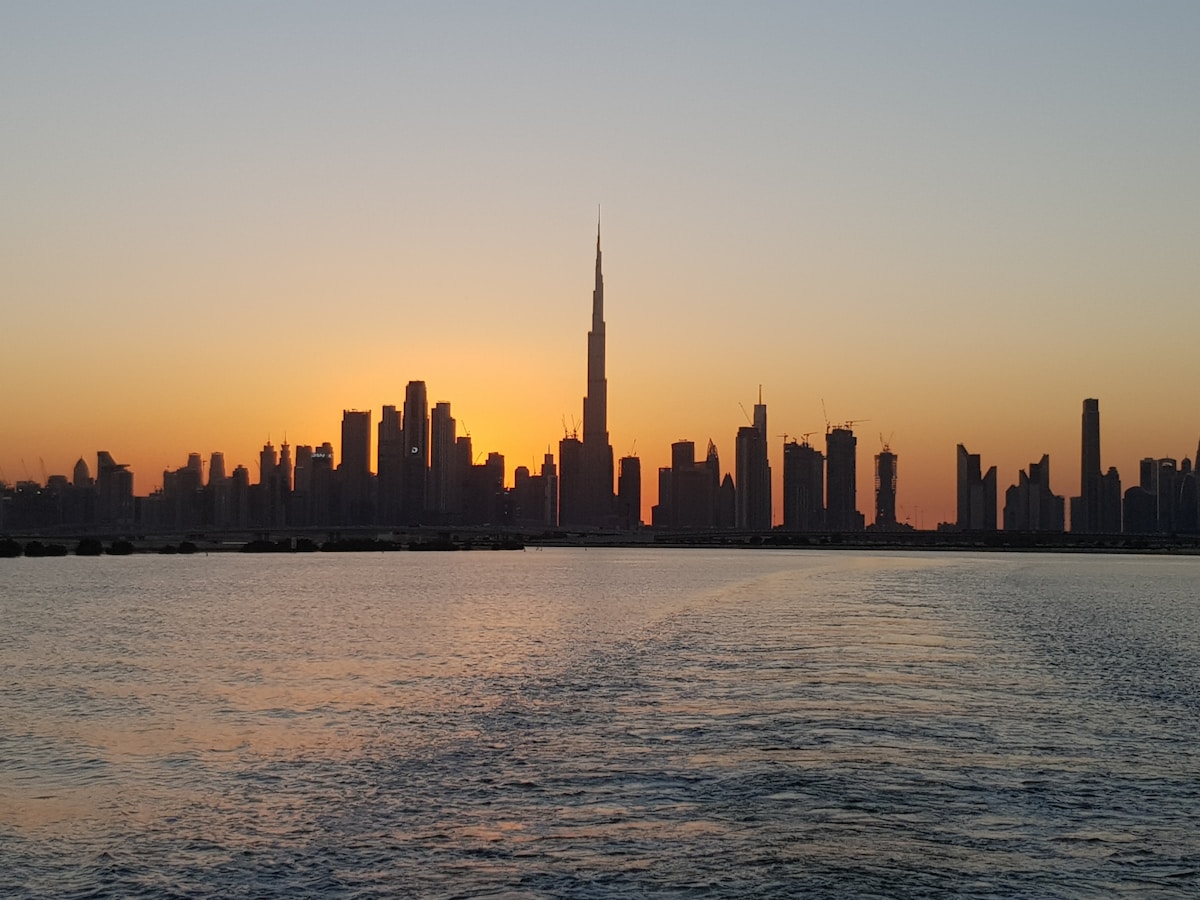
January is the UAE’s prime travel month: highs of 24-26°C, nights of 13-16°C and almost no rain, so it is well worth going. The heat that makes summer visits an endurance test is completely absent - replaced by warm, dry days, clear skies, and evenings cool enough to sit outside comfortably. If you have flexibility on when to visit, January consistently delivers the best overall experience across all seven emirates.
Dubai’s Peak: 26°C Sunshine, Dry Desert Air and Clear Winter Skies
| Location | Avg High °C | Avg Low °C | Conditions |
|---|---|---|---|
| Dubai | 26 | 14 | Sunny, very low humidity |
| Abu Dhabi | 25 | 13 | Clear skies, pleasant breeze |
| Sharjah | 25 | 14 | Similar to Dubai |
| Ras Al Khaimah | 23 | 12 | Slightly cooler, some mountain mist |
| Fujairah | 24 | 13 | East coast, occasional cloud |
| Al Ain | 26 | 12 | Dry, cooler nights |
Rainfall in January is rare but not impossible - the UAE does occasionally receive brief winter showers, particularly in the northern emirates. These pass quickly and rarely disrupt plans.
Dubai Shopping Festival and Global Village: January’s Big Retail and Cultural Calendar
Dubai Shopping Festival - typically runs late December through late January. This is one of the world’s largest retail festivals, with discounts across hundreds of malls, live concerts, fireworks, and raffles. Global Village (near Dubai) also typically runs through this period, with pavilions representing over 90 countries, street food, and nightly entertainment. Check the Dubai Calendar app for exact 2026 dates and participating venues.
Liwa Date Festival - held in the Liwa Oasis area of Abu Dhabi emirate (roughly 250 km southwest of Abu Dhabi city). If you want to see a traditional side of the UAE beyond malls and skyscrapers, this festival showcases date varieties, camel competitions, and cultural displays. Entry is generally free.
UAE outdoor events - the coolness of January makes outdoor activities like desert safaris, hiking in Jebel Jais (Ras Al Khaimah), and kayaking in the mangroves around Abu Dhabi genuinely enjoyable rather than heat-managed endurance exercises.
Jebel Jais, Fujairah’s East Coast and Splitting Dubai with a Quieter Emirate
January suits every part of the UAE equally well, but if this is your first visit, split your time between Dubai (for the city experience and Shopping Festival atmosphere) and one of the quieter emirates.
Search hotels in Dubai, UAE on Booking.com
Ras Al Khaimah is worth a day or two. Jebel Jais, the UAE’s highest peak at 1,934 metres, is accessible by road and the summit area offers views across the Hajar Mountains that most tourists never see. The Jebel Jais Flight zipline is the world’s longest, at approximately 2.83 km. Book in advance; slots fill quickly in January.
Fujairah and the East Coast offer a different pace entirely - the Hajar Mountains meet the Gulf of Oman here, and you can visit Al Bidyah Mosque (the UAE’s oldest, dating to the 15th century), snorkel off Snoopy Island near Khor Fakkan, or drive the mountain road through Wadi Wurayah.
Al Ain Zoo and Jebel Hafeet at Their Best in January’s Cool Conditions
Al Ain, Abu Dhabi emirate’s inland city (about 1.5 hours from Dubai), is at its best in January. The Al Ain Zoo - one of the largest in the Middle East - is genuinely enjoyable in January temperatures: meerkats, Arabian oryx, and the world’s largest cheetah collection on a 900-hectare site. Entry is approximately AED 50 for adults, AED 30 for children. Jebel Hafeet, the 1,249-metre limestone mountain just outside Al Ain, has a smooth road all the way to the summit and 360-degree views across the UAE and Oman border region - one of the best day trips from either Al Ain or Dubai.
Liwa Mega Dunes Overnight Camps: January Nights at 12–14°C Are Ideal for the Desert
January nights in the UAE desert reach 12–14°C - cold enough that sleeping bags are worthwhile, warm enough that camping is genuinely comfortable. This is the peak season for overnight desert safaris. The most immersive experiences are in the Liwa Mega Dunes (Abu Dhabi emirate), where operators set up private Bedouin-style camps among 100-metre dunes with camel rides, Arabic coffee, and fire-lit dinner service. Operators from Dubai typically include transport, making it a self-contained experience. Prices from approximately AED 350 per person for shared camps to AED 800+ for private setups. Book at least 10 days ahead for January weekends.
Getting Around in Peak Season: Metro, Careem and Etihad Rail
January is peak season for taxis, Ubers (via Careem), and the Dubai Metro. The Metro runs from approximately 05:30 to midnight on weekdays (until 01:00 on weekends) and connects Dubai International Airport to most major attractions. A single Nol card journey from the airport to Downtown Dubai costs approximately AED 8–14 depending on zones.
Inter-emirate travel is typically by taxi, Uber/Careem, or rented car. Etihad Rail now connects Dubai (Al Yalayis) to Abu Dhabi Central in approximately 64 minutes (from AED 39 standard class; Dubai extension opened 30 September 2026), with onward service to Fujairah. For taxis, expect approximately AED 200–300 for a one-way journey from Dubai to Abu Dhabi (roughly 1.5 hours by road).
Peak Season Rates and Where to Stay: Downtown, Dubai Marina or Abu Dhabi Corniche
January is the highest-demand month of the year in Dubai. Book accommodation at least 2–3 months ahead. Rates at mid-range hotels in Dubai typically start from approximately AED 500–800 per night in January; budget options in Deira (old Dubai) can be found from approximately AED 200–350.
Where to stay:
- Downtown Dubai / Business Bay: central for Burj Khalifa, Dubai Mall, and the Dubai Fountain. The Address Downtown is a well-regarded luxury option; mid-range travellers should consider Vida Downtown or similar.
- Dubai Marina: better suited if beach time is a priority. A short Metro ride or taxi to the city centre.
- Abu Dhabi: more affordable than Dubai by 20–30% for comparable quality. Corniche-area hotels give easy access to the beach and are 15–20 minutes from Sheikh Zayed Grand Mosque.
Rooftop Dining and Outdoor Terraces: Where to Eat When the Weather Is Perfect
January’s outdoor weather makes rooftop dining and outdoor terrace restaurants genuinely enjoyable. A few well-regarded options:
- Zuma Dubai (DIFC): Japanese robatayaki; mid-to-high price point, approximately AED 250–450 per person without drinks.
- Al Fanar Restaurant (Dubai Festival City and Jumeirah): traditional Emirati food in a setting designed to evoke an old Gulf trading town. From approximately AED 80–150 per person; good for first-timers wanting to try machboos (spiced rice with meat), harees, and luqaimat.
- Bu Qtair (Jumeirah Beach): no-frills but famous - a small fish shack where you choose your fish and they fry it. Typically AED 50–80 per person. Cash only, no reservations; expect a queue in January.
Light Layers for 26°C Days and a Jacket for 13°C January Evenings
January evenings can reach 13–14°C, which feels genuinely cool after a day in 25°C sunshine. Pack light layers - a cardigan or thin jacket for evenings is enough. Bring comfortable walking shoes for the Old Dubai souks and cooler areas. Sunscreen is still needed during the day. Modest clothing (covering shoulders and knees) is expected when visiting mosques, souks, and government buildings.
January is about as close to perfect conditions as the UAE gets. Book early, mix city and nature, and do not leave without at least one evening watching the Burj Khalifa light show.
Aviasales is useful for tracking seasonal fare fluctuations - prices vary considerably between peak (December–January, March–April) and shoulder months. GetYourGuide lists UAE tours and activities with live availability - useful for planning ahead in peak season when popular experiences sell out. VisitorsCoverage covers UAE travel for most nationalities; worth arranging before you book flights.
January Trip Planning
- Best time to visit the UAE - full month guide
- Dubai travel guide
- Ras Al Khaimah travel guide - Jebel Jais zipline and mountain hiking at their best
- Desert overnight camp guide - January nights are cool and stargazing is excellent
- Diving in Fujairah - optimal winter visibility
- Burj Khalifa visitor guide
- 3-day Dubai itinerary
For capital-specific advice, see Abu Dhabi in January and Dubai in January.
For a month-by-month comparison, see the UAE winter sun guide.
Plan Your Trip
January is peak season - plan 2–3 months ahead minimum. Flights into Dubai and Abu Dhabi are most competitive when booked by September; track fares on Aviasales for alerts as prices shift. Travel insurance is non-negotiable: UAE medical treatment is expensive without cover. An Airalo eSIM sorts connectivity from landing - no airport SIM counter needed. For January specifically, book desert safaris and Shopping Festival tours early: Liwa overnight camps and popular dune experiences sell out on January weekends. A hire car is worthwhile if you plan to visit Ras Al Khaimah or Al Ain; car hire from Dubai is readily available, though Dubai city itself is manageable without one.