3 Days in Dubai: First-Timer's Itinerary
Book an experience
Itineraries in the area
Best price guaranteed · Instant confirmation · Free cancellation on most bookings
Contents
- Budget Overview
- Where to Stay
- Day 1: Old Dubai — Al Fahidi, the Creek, and the Souks
- Morning
- Late Morning
- Lunch
- Afternoon
- Evening
- Day 2: Modern Dubai — Burj Khalifa, Dubai Mall, and the Marina
- Morning
- Late Morning
- Lunch
- Afternoon
- Evening
- Day 3: Desert Safari, Palm Jumeirah, and La Mer
- Morning
- Afternoon
- Late Afternoon and Evening
- Practical Notes
- Getting Around Dubai
- Transport Cost Summary
- What to Pack
Three days in Dubai is the right amount of time to see the city’s main draws without feeling rushed. This itinerary moves from the historic creek and souks through the modern skyline to the desert and back to the coast — a full arc of what makes Dubai worth visiting.
Budget Overview
| Category | Budget | Mid-Range | Luxury |
|---|---|---|---|
| Hotel/night | AED 200–350 (USD 55–95) | AED 500–900 (USD 135–245) | AED 1,500+ (USD 410+) |
| Meals/day | AED 80–120 (USD 22–33) | AED 180–300 (USD 49–82) | AED 500+ (USD 136+) |
| Transport/day | AED 25–50 (USD 7–14) | AED 60–120 (USD 16–33) | AED 200+ (USD 55+) |
All prices are approximate as of 2026.
Where to Stay
Budget: Rove Downtown — clean, modern, well-located rooms from approximately AED 280/night (USD 76). Walking distance to Dubai Mall and the metro.
Mid-range: Vida Downtown Dubai — boutique feel, rooftop pool with Burj Khalifa views, from approximately AED 600/night (USD 163).
Luxury: Address Downtown — directly connected to Dubai Mall, Burj Khalifa views from most rooms, from approximately AED 1,400/night (USD 381). For beach-side luxury, One&Only Royal Mirage in the Marina area starts from approximately AED 2,200/night (USD 600).
Day 1: Old Dubai — Al Fahidi, the Creek, and the Souks
Old Dubai is the reason the modern city exists. Before the oil wealth and the skyscrapers, this was a trading port on a tidal creek, and the original merchants’ quarter is still here.
Morning
Start at Al Fahidi Historical Neighbourhood (also known as Al Bastakiya). This is Dubai’s oldest residential area — a restored cluster of coral-and-gypsum buildings with wind towers, narrow sikkas, and a handful of small galleries and cafes. Entry to the neighbourhood is free.
Visit the Dubai Museum inside Al Fahidi Fort, the city’s oldest building (built in 1787). Entry costs AED 3 and the museum is open 8:30am–8:30pm Saturday to Thursday, 2:30pm–8:30pm Friday. The underground galleries show life-size dioramas of pre-oil Dubai — pearl diving, trading, and desert life.
Walk through to the Textile Souk along the creek side. The fabrics are mostly synthetic these days, but the covered walkways are atmospheric and lead directly to the abra station.
Late Morning
Take an abra across Dubai Creek. These wooden water taxis cost AED 1 per crossing and run continuously from early morning until midnight. The crossing takes about 5 minutes and drops you in Deira, directly at the entrance to the souks.
Walk through the Spice Souk first — saffron, frankincense, dried limes, and everything in between. Prices are negotiable. Then continue to the Gold Souk, a covered market with approximately 300 retailers. The gold here is sold by weight plus a making charge — quality is government-regulated, so the difference between shops is in craftsmanship and design rather than purity.
Lunch
Al Ustad Special Kabab in Deira — operating since 1978, this Iranian restaurant serves kebabs, grilled meats, and stews. Mains from AED 30–55. It is small, no-frills, and consistently good. Alternatively, Arabian Tea House back in Al Fahidi (mains from AED 45–75) for Emirati dishes in a white-washed courtyard.
Afternoon
Visit the Coffee Museum in Al Fahidi (free entry, small, 30 minutes) and the XVA Gallery (free, contemporary Middle Eastern art). If time allows, walk along the creek to Al Seef — a modern waterfront development designed to look like the old merchants’ quarter, with restaurants, shops, and creek views.
Evening
Dinner at Al Fanar Restaurant and Cafe in Festival City Mall — traditional Emirati food in a setting modelled on a 1960s Dubai house. Mains from AED 55–95. Try the chicken machboos (spiced rice) or lamb harees. Alternatively, Sono at the DIFC (Japanese-Peruvian, mains from AED 80–140) if you want something more contemporary.
After dinner, take a dhow cruise on the creek. One-hour dinner cruises run approximately AED 65–120 per person and depart from Al Seef or Bur Dubai wharf. The food is average — the value is in the illuminated creek views from the water.
Day 2: Modern Dubai — Burj Khalifa, Dubai Mall, and the Marina
Morning
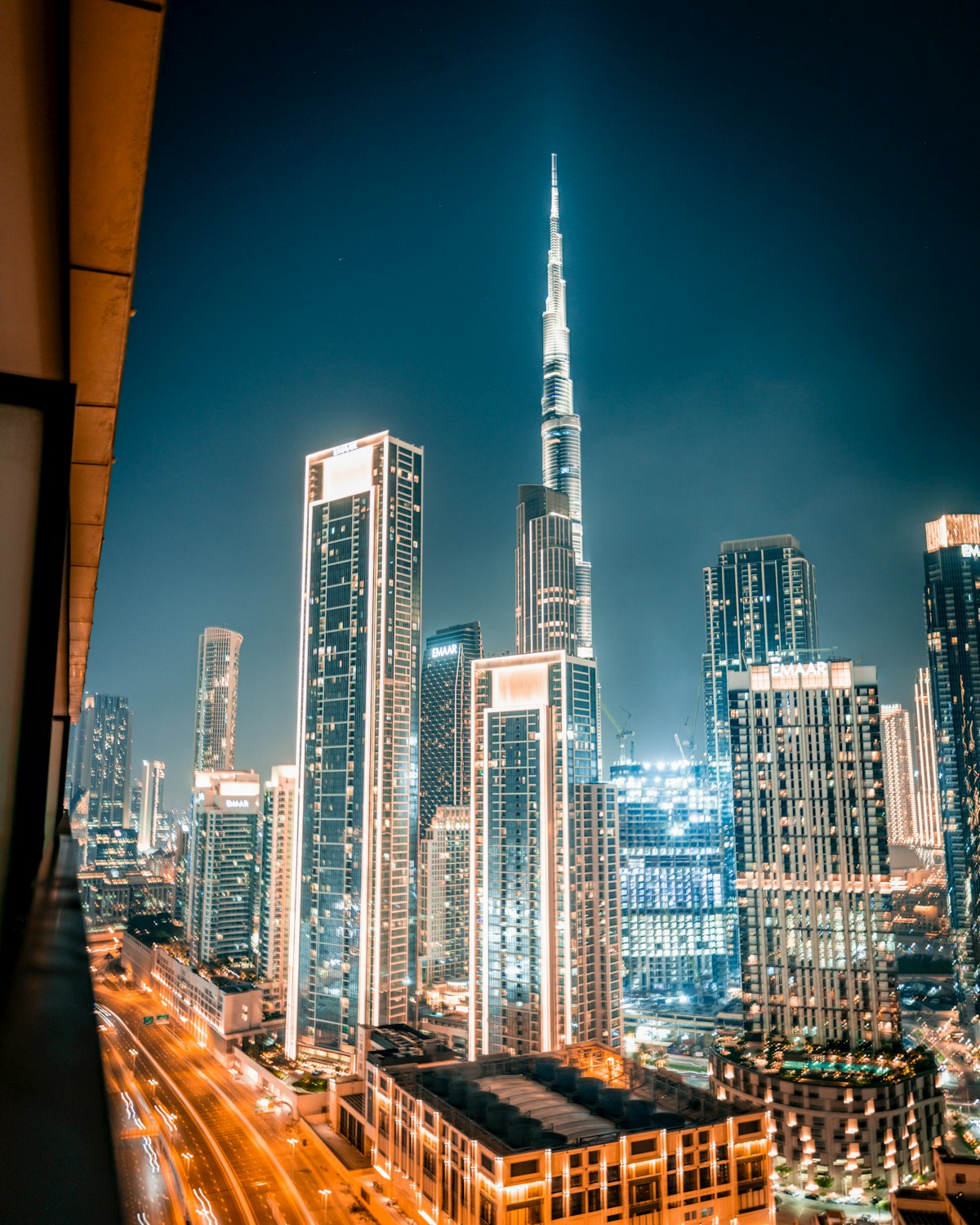
Book the first slot at Burj Khalifa — At The Top (124th and 125th floor). Standard tickets cost approximately AED 169; the premium 148th floor (At The Top SKY) costs approximately AED 379 (as of 2026). The observation deck opens at 10am, but sunrise slots are available from 8:30am at a higher price. Book online at least 2 days ahead via burjkhalifa.ae — walk-up prices are significantly higher.
From the top, you can see the entire city laid out below — the Palm, the World Islands, the creek, and on clear days, the coast of Iran across the Gulf.
Late Morning
Descend into Dubai Mall. The Dubai Aquarium viewing panel is free from the ground floor — the 10-million-litre tank holds over 33,000 animals. The tunnel walkthrough and underwater zoo cost approximately AED 135. The Dubai Fountain outside performs every 30 minutes from 6pm, but there is also a 1pm and 1:30pm show on weekdays.
Lunch
Tim Ho Wan inside Dubai Mall — the Hong Kong dim sum chain. Steamed buns, dumplings, and rice rolls from AED 30–50 per dish. Quick, affordable, and better than most mall options. For something more substantial, The Cheesecake Factory (mains from AED 65–95) or Eataly (Italian food hall, pasta dishes from AED 55–80).
Afternoon
Take the Metro Red Line to Dubai Marina (approximately 20 minutes from Burj Khalifa/Dubai Mall station). Walk the Marina Walk — a 7km promenade looping the man-made canal lined with towers, restaurants, and moored yachts.
Continue on foot to JBR Beach (Jumeirah Beach Residence). The public beach is free, with paid sunbed rentals from approximately AED 50–100 at beachside operators. The water is warm year-round (24°C in winter, 34°C in summer).
Evening
Dinner at Pier 7 in the Marina — a seven-storey dining tower where each floor is a different restaurant. Asia Asia (pan-Asian, mains from AED 90–150) on the top floor has the best views. For something more casual, The Maine Oyster Bar & Grill on the DoubleTree hotel terrace (mains from AED 80–130) overlooks the marina yachts. If you are still in Downtown from the Burj Khalifa visit, Zaroob near Vida Downtown (AED 60–90/person) is excellent for Gulf street food, or splurge at Zuma Dubai in the DIFC (approximately AED 350/person) — one of the city’s consistently best Japanese restaurants.
Walk along The Walk at JBR after dinner — the street-level promenade has performers, pop-up stalls, and people-watching. Finish at Ain Dubai (the observation wheel on Bluewaters Island) if it is operating during your visit — check current status before going, as it has had extended closures.
Day 3: Desert Safari, Palm Jumeirah, and La Mer
Morning
An early-morning desert safari picks up from your hotel between 7am and 8am. Morning safaris are less common than evening ones but offer better light for photography and cooler temperatures. Options include dune bashing (30–45 minutes in 4WD SUVs), sandboarding, and camel riding. Half-day morning safaris run approximately AED 200–350 per person for a shared group tour and return you to the city by 12pm–1pm (as of 2026). For a premium experience, Platinum Heritage operates exclusive safaris in the Dubai Desert Conservation Reserve — approximately AED 600–900/person — with vintage Land Rovers and a stronger conservation focus. See our Dubai desert safari guide for operator comparisons.
Alternatively, if you prefer the more common evening safari format, the afternoon pickup (14:30–15:30) includes dune bashing, a camel ride and sunset photography, Bedouin camp dinner with entertainment, and returns you by 21:00–21:30. Shared evening tours run approximately AED 150–250/person.
For a slow start before the desert, Comptoir 102 in Jumeirah (AED 60–90/person) is a good healthy café breakfast option — and it is convenient if you are heading out to the dunes from that direction.
If you prefer to skip the desert entirely, start the morning with the Jumeirah Mosque free guided tour at 10:00 — it runs approximately 75 minutes and is one of the few mosques in Dubai open to non-Muslim visitors. Then use the rest of the morning for Dubai Frame (AED 50, open 9am–9pm) — a glass-floored bridge between two towers that frames old Dubai on one side and new Dubai on the other — or Museum of the Future on Sheikh Zayed Road (approximately AED 149, open daily 10am–7:30pm). The building is one of the most striking in the city — a torus-shaped structure covered in Arabic calligraphy. The interior exhibitions are immersive and focus on environmental and technological futures.
Afternoon
Take a taxi or Uber to Palm Jumeirah (approximately AED 40–60 from Downtown). Ride the Palm Monorail from the Gateway Station to Atlantis (AED 30 return, runs 10am–10pm).
At Atlantis, The Palm: visit The Lost Chambers Aquarium (approximately AED 130 entry, open 10am–9pm) — a series of underwater tunnels and chambers themed around the lost city of Atlantis. If you want a swim, Aquaventure Waterpark costs approximately AED 299 for a day pass and includes beach access — book ahead via atlantis.com for online discounts.
Walk back along The Pointe at the tip of the Palm for views of Atlantis and the Dubai skyline. Lunch at The Pointe food court or sit-down at Alici (Italian seafood, mains from AED 85–140).
Late Afternoon and Evening
Head to La Mer in Jumeirah — a beachfront leisure area with a public beach, street art, and waterfront dining. The beach is free. Arrive by 4:30pm–5pm to settle in before sunset.
La Mer is a good place to end the trip. It is relaxed, walkable, and the sunset views across the Gulf are the best easily accessible ones in the city.
Dinner at Salt at La Mer — a Dubai-born burger chain served from a vintage Airstream trailer. Burgers from AED 35–50. Or 3Fils nearby in Jumeirah Fishing Harbour — a tiny, no-reservation counter-service restaurant that consistently ranks among the best in the city (small plates from AED 40–70, expect a wait).
Practical Notes
- Friday Metro hours: The Dubai Metro runs a later start on Fridays — from 10:00 rather than 5:00. If your trip starts on a Friday, plan accordingly or take a taxi for morning journeys.
- Desert safari minimums: Shared tour operators typically accept solo travellers. Private tours usually require a minimum of 2 people — confirm when booking.
- Burj Khalifa bookings: Book at least 2 days ahead in peak season (October–April). Walk-up prices are significantly higher than advance tickets.
- Dress code: Swimwear is appropriate only at the beach and pool. Cover shoulders and knees in public spaces, shopping centres, and especially Old Dubai.
Getting Around Dubai
Dubai Metro: Two lines — Red and Gold. The Red Line covers most tourist areas (Deira, Downtown, DIFC, Mall of the Emirates, Marina, JBR). Runs 5am–midnight Saturday–Wednesday, 5am–1am Thursday–Friday. Single tickets AED 6–8.50 depending on zone. A day pass costs AED 22 (Red/Gold zones).
Taxis: Metered, starting at AED 12 (AED 12 minimum fare). Most rides within the city cost AED 25–60. Airport pickup adds AED 25.
Ride-hailing: Careem (local) and Uber both operate. Prices are comparable to taxis, sometimes slightly cheaper.
Abra: AED 1 per creek crossing. The cheapest and most atmospheric transport in Dubai.
Transport Cost Summary
| Journey | Method | Cost (approx.) |
|---|---|---|
| DXB Airport to Downtown | Metro | AED 6–8.50 |
| DXB Airport to Downtown | Taxi | AED 80–100 |
| Downtown to Dubai Marina | Metro | AED 6–8.50 |
| Downtown to Palm Jumeirah | Taxi | AED 40–60 |
| Downtown to La Mer | Taxi | AED 25–40 |
| Metro day pass | All zones | AED 22 |
| Palm Monorail | Return | AED 30 |
All costs approximate as of 2026.
Aviasales compares fares into Dubai International, Abu Dhabi International, and Sharjah airports — worth checking all three for the cheapest entry point. GetYourGuide covers desert safaris, Burj Khalifa tickets, Abu Dhabi day trips, and more — pre-booking a couple of key activities avoids sold-out slots in peak season. If you’re still finalising which activities to include, our last-minute tours page shows what’s bookable with same-day or 24-hour notice across Dubai and the UAE. VisitorsCoverage covers UAE medical costs and trip cancellation; worth arranging before the first hotel deposit is paid.
What to Pack
Dubai is air-conditioned everywhere indoors, so bring a light layer for malls, restaurants, and the metro. Swimwear is appropriate only at the beach and pool — cover shoulders and knees in public spaces, shopping centres, and especially the old town. Sunscreen and a hat are essential year-round. Bring comfortable walking shoes for Old Dubai’s uneven paths and the Marina promenade.
Frequently Asked Questions
- Is 3 days enough for Dubai?
- Three days covers all the major highlights — Old Dubai, Burj Khalifa, the malls, a desert safari, and beach time. You will not have time for day trips to Abu Dhabi or the east coast, but you will leave feeling you have seen the city properly rather than just scratching the surface.
- How much does 3 days in Dubai cost?
- Budget travellers can manage approximately AED 2,200–3,000 (USD 600–820) for three days including accommodation, food, transport, and key attractions. Mid-range visitors should expect AED 3,500–5,500 (USD 950–1,500). These estimates exclude international flights and assume double occupancy, as of 2026.
- Where should I stay for 3 days in Dubai?
- Downtown Dubai puts you within walking distance of Burj Khalifa and Dubai Mall, with metro access to the rest of the city. Dubai Marina is better for beach access and nightlife. Deira and Bur Dubai are the budget-friendly options, closer to Old Dubai's souks and heritage sites.
- What is the best first thing to do in Dubai?
- Start with Old Dubai — Al Fahidi neighbourhood, Dubai Creek, the gold and spice souks, and an abra crossing. This gives you the city's history and character before the modern spectacle, which makes the contrast with the Burj Khalifa and Downtown feel more meaningful.
- Is a 2-night weekend in Dubai worth it?
- Yes, if you use the time well. Two full days covers the Burj Khalifa, Old Dubai Creek and souks, a desert safari, and the Marina or Palm area. The main limitation on very short stays from Europe (3–4 hours time difference) or the US (8–12 hours) is jet lag — build in arrival-evening recovery time and keep the desert safari for day two.
- Do I need a car in Dubai?
- No. The Dubai Metro covers most tourist areas on the Red Line (Downtown, Marina, Mall of the Emirates, Deira). Taxis and ride-hailing apps (Careem, Uber) are affordable for trips the metro does not reach. A metro day pass costs AED 22, and most taxi rides within the city run AED 25–60.
Ready to explore?
Browse hundreds of tours and activities. Book securely with free cancellation on most options.
Browse on GetYourGuide →Best price guaranteed — same price as booking direct. We earn a small commission at no extra cost to you.