Louvre Abu Dhabi: Visitor Guide
Book an experience
Book this activity
These are the top-rated activities for this area — book ahead to lock in your preferred date.
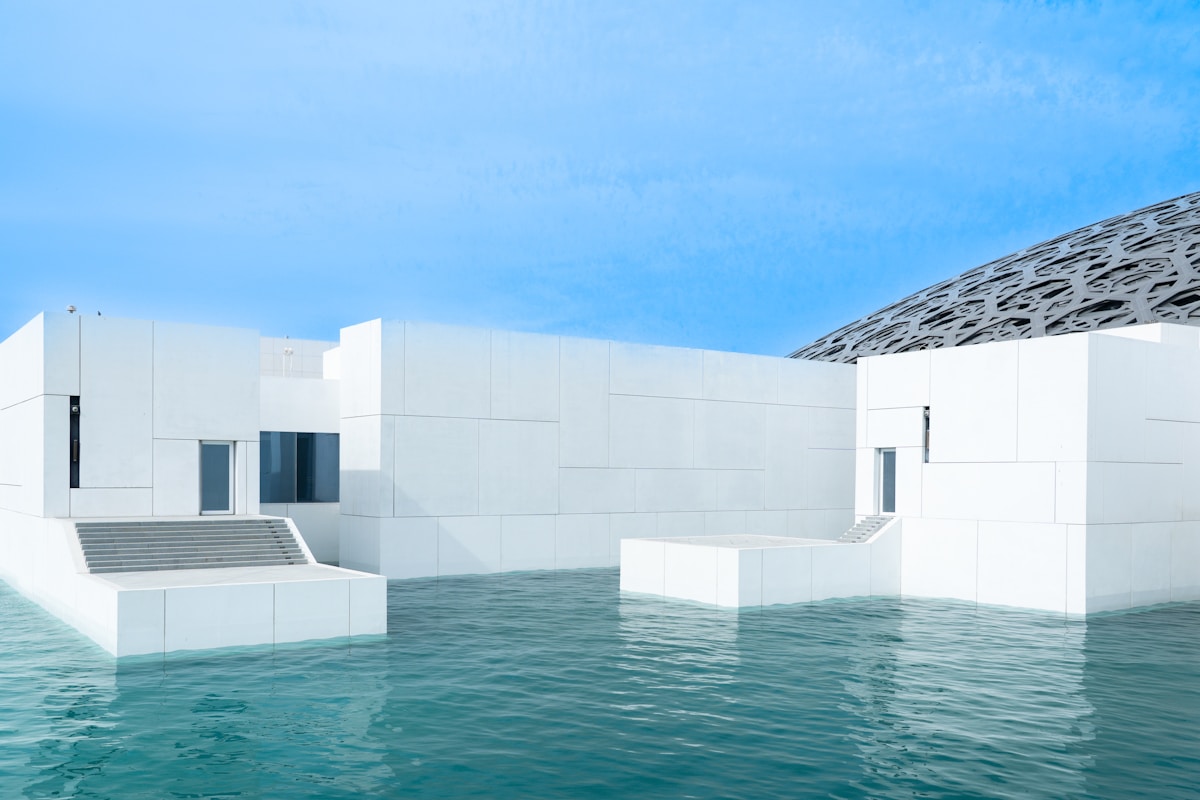
The Louvre Abu Dhabi opened in 2017 on Saadiyat Island and is the result of a 30-year cultural agreement between the UAE and France. The building — designed by French architect Jean Nouvel — is as much the attraction as the collection inside. A perforated geometric dome 180 metres in diameter floats above galleries and waterways, creating a dappled light effect on the whitewashed surfaces below that Nouvel called a “rain of light.” It is one of the more impressive museum buildings constructed anywhere in the world in recent decades.
The collection covers human civilisation from ancient times to the modern era, arranged thematically across 23 permanent galleries and a dedicated temporary exhibition space.
Tickets and Opening Hours
Adults: approximately AED 63 as of 2026. Purchase at the door, via the Louvre Abu Dhabi website, or on Klook — Klook pricing is typically slightly below gate price with instant confirmation. Online booking is recommended for weekends and public holidays.
Children under 13: free entry.
Students and seniors: discounted entry — check the official website for current rates.
Opening hours:
- Saturday–Wednesday: 10:00–20:00
- Thursday–Friday: 10:00–21:00
- Closed on Monday
The museum closes for some national holidays — verify on the official website before visiting.
The Building: Jean Nouvel’s Dome
The dome is the architectural headline. A latticed steel structure covers the entire complex of galleries and outdoor spaces, filtering sunlight into constantly shifting patterns on the walkways below. The effect changes with the sun’s position — visiting at midday produces the densest light show; late afternoon gives warmer, lower-angled beams.
The museum sits on stilts above a lagoon, with outdoor walkways and viewing platforms around the water’s edge. Allow time to walk the outer promenade, particularly in cooler months (October–April), where the combination of the Gulf water, the dome, and the skyline is worth pausing for.
The Permanent Collection
The galleries are arranged chronologically and thematically from ancient world to contemporary art, covering civilisations across Asia, Europe, the Middle East, and the Americas within a single continuous narrative.
Gallery 1 — The First Villages: Objects from pre-historic settlements across the Arabian Peninsula, Mesopotamia, and the Mediterranean, including some of the oldest decorative objects in the collection.
Galleries 3–5 — Ancient Worlds: Egyptian, Greek, Roman, Mesopotamian, and early Arabian artefacts displayed alongside each other to draw parallels between contemporary civilisations. The juxtaposition is deliberate and effective — a Roman portrait bust next to an Egyptian canopic jar from the same century makes both more interesting.
Galleries 6–8 — Universal Religions: Works related to Islam, Christianity, Buddhism, and Judaism from the 7th–15th centuries, including illuminated manuscripts, devotional objects, and architectural elements.
Galleries 9–12 — Connected World: The period from the 15th to 19th centuries, covering trade routes, colonialism, and cultural exchange. European oil paintings alongside Chinese porcelain and Ottoman textiles.
Galleries 15–23 — Modern and Contemporary Art: Works from the 20th and 21st centuries including paintings, sculpture, and video art from global artists.
The temporary exhibition galleries rotate throughout the year — check the Louvre Abu Dhabi website for what is showing during your visit. Major temporary exhibitions have included loans from the Louvre Paris and other Agence France-Muséums member institutions.
Café and Restaurant
Le Café Français: Ground-floor café serving light meals, pastries, and drinks. Good for a break mid-visit. Prices are at the higher end — approximately AED 30–60 for a light lunch item.
Fouquet’s Abu Dhabi: The full-service restaurant at the museum is a branch of the Paris institution. A proper sit-down lunch or dinner here costs approximately AED 150–250 per person. Booking in advance is advisable for evenings. The waterfront terrace is worth requesting in cooler months.
How to Get There
Location: Saadiyat Island, approximately 25 km from downtown Abu Dhabi and 130 km from central Dubai.
By taxi from Abu Dhabi city: Approximately AED 30–50 and 25–30 minutes. Taxis are metered in Abu Dhabi and reliable. Uber and Careem also operate.
By car from Dubai: Approximately 130 km via the E11 or E312 from Dubai — allow 90 minutes to two hours depending on traffic. Paid parking is available at the museum in a large open-air car park.
By bus from Abu Dhabi: Abu Dhabi city buses do not serve Saadiyat Island directly. Taxis remain the practical option for most visitors.
What Else Is on Saadiyat Island
The island is the focus of Abu Dhabi’s Cultural District development. Currently operating alongside the Louvre:
- Saadiyat Public Beach: A wide, clean beach with paid facilities. Open to the public.
- Manarat Al Saadiyat: A cultural centre and gallery space with rotating exhibitions (often free).
Under development on the island: the Guggenheim Abu Dhabi (opening anticipated within the next few years) and the Zayed National Museum, which will focus on UAE history and the legacy of Sheikh Zayed.
Practical Tips
- The museum is large — comfortable shoes matter.
- The outdoor walkways are exposed to direct sun. In summer (June–September), limit outdoor time to early morning and evening.
- Audio guides are available in multiple languages including Arabic, English, French, and Mandarin — worth renting for the permanent galleries.
- Plan at least two hours for a proper visit; three hours if you want to cover the temporary exhibition and take time on the outdoor terraces.
Book Louvre Abu Dhabi tickets on Klook for instant confirmation, typically at a small discount versus gate price. Tiqets is another reliable option for Abu Dhabi attraction tickets. GetYourGuide lists full-day Abu Dhabi tours from Dubai covering the mosque, Louvre, and Corniche in one day — useful if you’re basing yourself in Dubai.
See Also
Frequently Asked Questions
- Do I need to book Louvre Abu Dhabi tickets in advance?
- Booking online in advance is strongly recommended. Tickets sell out on busy weekends and public holidays, and online booking typically saves around 10%. Tickets are available via the official Louvre Abu Dhabi website. Same-day tickets are sometimes available at the door but cannot be relied upon.
- Is the Louvre Abu Dhabi affiliated with the Louvre Paris?
- Yes — it operates under a 30-year agreement (signed in 2007) with the French government and the Louvre Museum in Paris. The Abu Dhabi museum has genuine works loaned from the Louvre and other major French collections alongside its own permanent acquisitions. The agreement includes use of the Louvre name, curatorial expertise, and rotating loan exhibitions.
- Can you photograph the artworks at the Louvre Abu Dhabi?
- Photography for personal use is permitted in the permanent galleries, provided no flash is used and you do not use a tripod or monopod. Photography of temporary exhibitions may be restricted depending on the specific exhibition's loan agreements. Check the signage in each gallery.
Tickets & Attractions
Book Experiences in Advance
Pre-book popular attractions, tours, and experiences via Tiqets — instant confirmation and mobile tickets. Skip the queue on busy days.
Browse on Tiqets →Best price guaranteed — same price as booking direct. We earn a small commission at no extra cost to you.
Ready to explore?
Browse hundreds of tours and activities. Book securely with free cancellation on most options.
Browse on GetYourGuide →Best price guaranteed — same price as booking direct. We earn a small commission at no extra cost to you.