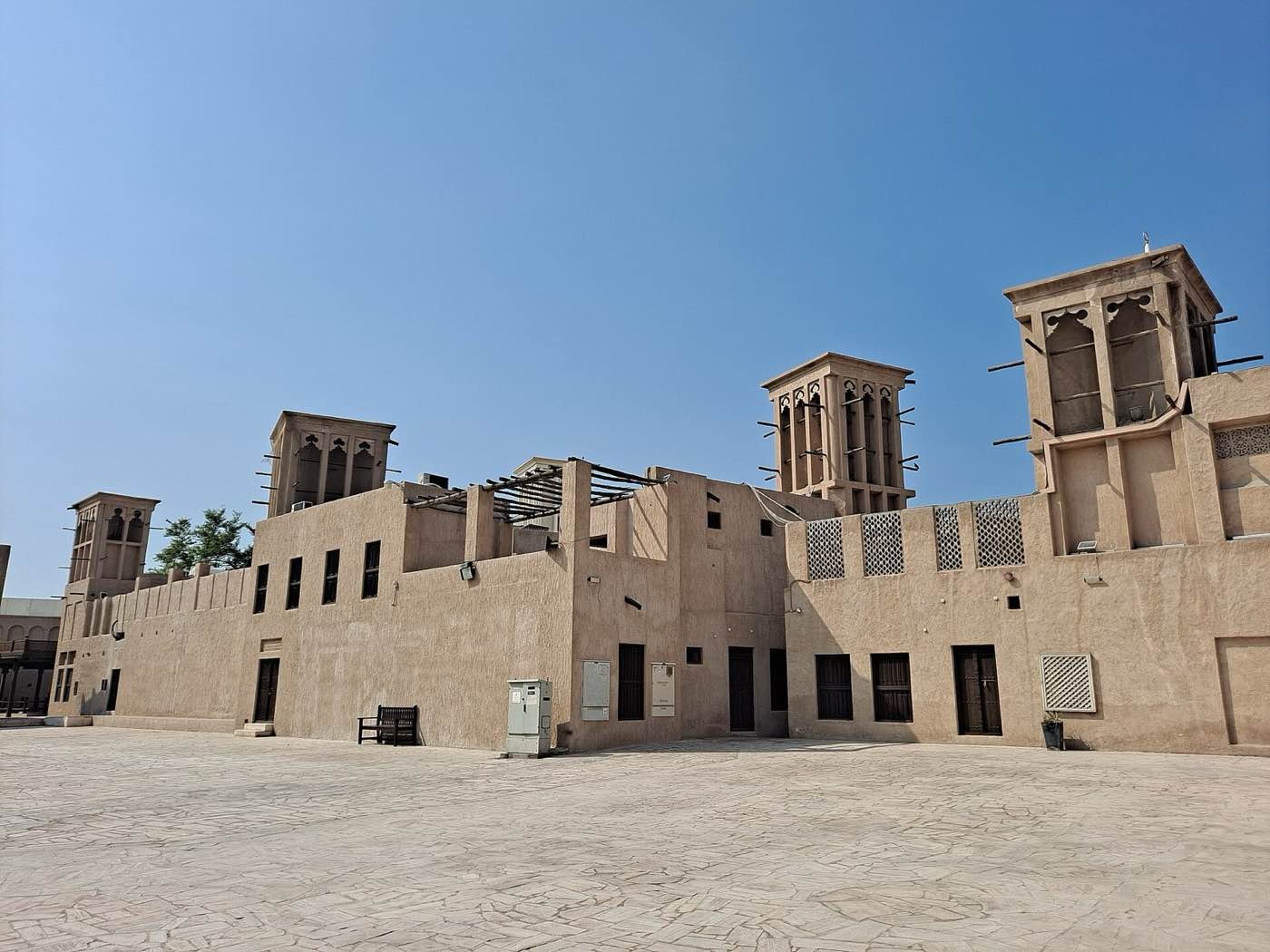
The Al Fahidi Historical Neighbourhood, also known as Al Bastakiya, is the best-preserved piece of pre-oil Dubai. It sits on the Bur Dubai side of the Creek, a few minutes from the abra landing, and it is where the city’s merchant families lived in the late 19th and early 20th centuries. The houses are low, thick-walled and built from coral stone, gypsum and palm timber, with wind towers (barajeel) that caught sea breezes and drew them down into the rooms below. Today the lanes hold galleries, small museums, cafes and a cultural centre that runs guided meals.
This page covers the neighbourhood itself. For the souks, the abra crossing and the Deira side, read our Dubai Creek and Deira guide; the two pages are designed to be used together.
Why Al Fahidi Is Worth Your Time
Most of Dubai was built after 1970, so there are very few places where you can stand in a street that predates the oil economy. Al Fahidi is one of them. The scale is human, the lanes are narrow enough to stay in shade for part of the day, and the architecture explains how people lived in the climate before air conditioning. It is also free to walk, which makes it one of the few genuinely low-cost half-days in the city. We recommend it for first-time visitors who want context before the skyscrapers, and for anyone with a layover of five hours or more.
Getting There
Al Fahidi Metro station on the Green Line is the closest stop, a short walk from the district. From the Creek, take the abra to the Bur Dubai landing (about AED 1 per crossing, as of 2026) and walk inland. Taxis can drop you at the edge of the neighbourhood, and the lanes themselves are best done on foot.
What to See and Do
Wind-tower houses and the lanes
The simplest plan is to wander without a fixed route. Look for the wind towers rising above the flat roofs, the carved teak doors, the gypsum screens and the coral-stone walls. Many courtyard houses are now galleries or offices, and several allow you to step inside. Good light arrives early morning and late afternoon.
Sheikh Mohammed Centre for Cultural Understanding (SMCCU)
The SMCCU is the neighbourhood’s best-known visitor programme, with an open-door policy of “open doors, open minds”. It runs guided walks of the district, introductions to Emirati customs and Al Fahidi Mosque visits that are open to non-Muslim guests, and it serves traditional meals in a heritage house. As of 2026 the organiser, Cultures.ae, lists these per-person prices:
| Cultural meal | Price (AED) | Typical schedule |
|---|---|---|
| Breakfast | 130 | Monday and Wednesday, 9:00 |
| Brunch | 130 | Friday to Sunday, 10:30 |
| Lunch | 145 | Monday to Thursday, 13:00 |
| Dinner | 160 | Tuesday, 18:30 |
Sessions are small, book ahead, and confirm days and times on the official page because schedules change around Ramadan and public holidays. Dress modestly for any session that includes the mosque.
Coffee Museum
The Coffee Museum is a small house museum devoted to the history of Arabic coffee and how it is served and prepared in the Gulf. It suits a 20 to 30 minute stop. Check opening hours and entry fees locally, as they vary by season.
XVA Gallery and the arts houses
XVA, a contemporary art gallery and cafe set in a restored wind-tower house, is the neighbourhood’s best-known creative space. It is free to browse and a good place to sit in a shaded courtyard. Several other houses nearby host exhibitions, craft shops and studios.
Arabian Tea House
The Arabian Tea House is the district’s best-known cafe, a courtyard restaurant serving Emirati breakfast dishes, karak tea and light lunches. Seating is mostly outdoors, so go before 11:00 in the warmer months, and reserve at weekends.
The Dubai Museum (Al Fahidi Fort)
The fort at the edge of the neighbourhood dates to the late 18th century and long housed the Dubai Museum. It has been closed for restoration since 2021, and Khaleej Times has reported that it will reopen as a new museum, with no confirmed date at the time of writing. Treat it as a bonus if it has reopened by your visit rather than a fixed stop.
Al Shindagha Museum
A short taxi ride or a longer waterfront walk takes you to Al Shindagha, the original ruling-family quarter near the mouth of the Creek. The Al Shindagha Museum is a heritage district of restored houses covering pearling, trade and everyday life. Opening hours are listed as 10:00 to 20:00 daily with last entry at 19:00, and adult entry through the official site was listed from about AED 15 as of 2026; resellers charge more. Allow 90 minutes. It pairs naturally with Al Fahidi and gives you the royal-family side of the story.
A Walking Route to the Abra
This route takes about three hours at an easy pace, with the museum stop included.
- Start at Al Fahidi Metro, then walk into the lanes and look at the wind towers before the heat builds.
- Coffee at XVA or the Arabian Tea House, then browse the galleries.
- Book the SMCCU breakfast or brunch if your day fits the schedule, or visit the Coffee Museum.
- Walk towards the waterfront and, if you have time, continue to Al Shindagha Museum.
- Return to the Bur Dubai abra landing and take an abra to Deira for the Gold Souk and Spice Souk, covered in the Creek guide.
If you would rather have a guide, the Old Dubai heritage walking tour covers the neighbourhood and the Creek in around three hours, and the Dubai Old Town, Creek, abra boat and souks walking tour adds the abra crossing and souks to the same route. Prices change, so compare current rates on the booking page.
Practical Tips
- Dress: shoulders and knees covered is respectful, and required for the mosque. Bring a hat and water.
- Best season: November to March. In summer, visit before 9:00 or after 16:30.
- Photography: fine in the lanes. Ask before photographing residents or inside a gallery.
- Eating: besides the Arabian Tea House, the surrounding Bur Dubai streets have inexpensive South Asian cafeterias; see our Dubai food guide for more.
- Combine with: a dhow cruise in the evening completes an old-Dubai day.
Prices and schedules in this guide are approximate as of 2026 and can change, so confirm them with the operator before you go.