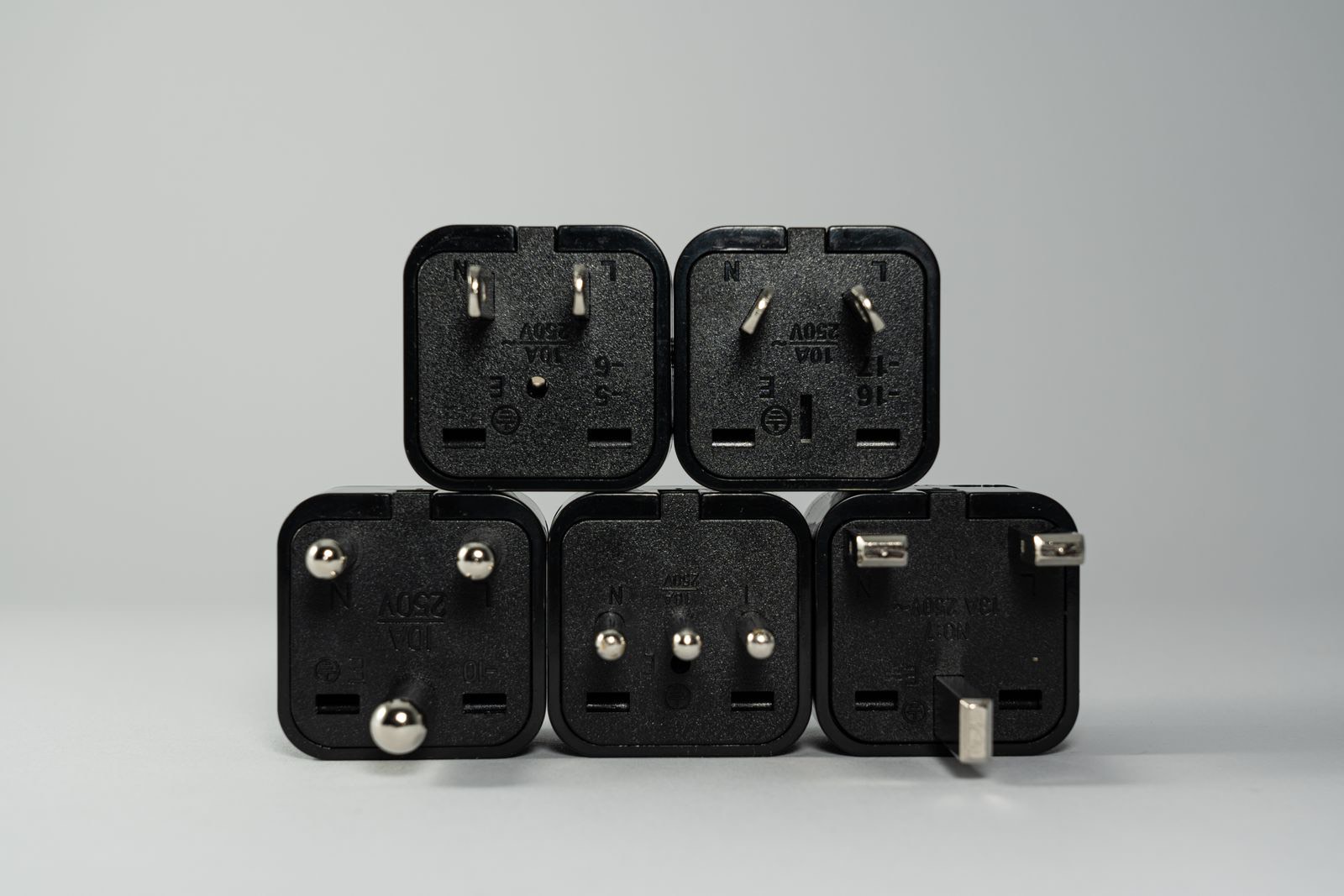
Electricity in the UAE is simple for most visitors, but the wrong plug or a 110V-only gadget can leave you without a working phone or hair dryer on day one. This page covers the plug type, voltage and frequency, who needs an adapter, who needs a converter, and what to buy before you leave or after you land. If you are still building your bag, our UAE packing list covers clothing and the rest of the essentials.
UAE plug type, voltage and frequency at a glance
| Item | UAE standard |
|---|---|
| Plug and socket type | Type G (British three-pin) |
| Voltage | 230V |
| Frequency | 50Hz |
| Also found | Type C and Type D in some older buildings |
| Typical basic adapter price | Approximately AED 20 to 40 (as of 2026) |
The UAE follows the British system, a legacy of the Trucial States era, so Type G sockets are standard in new hotels, apartments, malls and offices across Dubai, Abu Dhabi, Sharjah and the other emirates. Sockets usually have a built-in switch beside them, and the plug’s earth pin holds a safety shutter open, which is why a cheap plug with the wrong pin shape will not fit.
Which visitors need an adapter
UK, Ireland (for UK-style devices), Malaysia, Singapore, Hong Kong and Cyprus: these places use Type G, so your plugs fit directly. You do not need an adapter.
Continental Europe (Type C, E, F): your two-round-pin plugs will not fit a Type G socket. You need a plug adapter, but not a converter, because Europe also runs at 230V. This is the cheapest case to solve.
US, Canada, Japan and Mexico (Type A and B): you need an adapter, and you must check voltage. North American mains is 110-120V, so a device rated only for that range can be damaged on 230V.
Australia and New Zealand (Type I): you need an adapter. Voltage is 230V, so no converter is needed.
India and South Africa (Type D and M): you need an adapter. Voltage is compatible.
China: many sockets there accept several plug types, but UAE sockets will not, so pack an adapter.
Adapter versus converter
A plug adapter only changes the shape of the pins. A voltage converter (or transformer) changes the electricity itself. Most people need only the first.
Look at the small print on each charger or the device label. If it reads “100-240V, 50/60Hz”, it is dual voltage and works anywhere with the right adapter. Phones, tablets, laptops, cameras, e-readers, power banks and smartwatches nearly all fall in this group.
The risk is heating and motor devices. Many US-bought hair dryers, curling irons, electric shavers and travel kettles are 120V only. Plugged straight into a 230V socket, they can burn out quickly. Either leave them at home, buy a dual-voltage model, or buy the item in the UAE instead. Salons and hotels in Dubai and Abu Dhabi almost always supply hair dryers, so most visitors can skip this.
What to pack
- A compact universal adapter with a Type G output. Choose one with built-in fuse protection and ideally two or more USB-A or USB-C ports, so a single socket can charge a phone and a camera together.
- A short extension strip with Type G plugs (bought in the UAE) if you share a room and need several outlets, since hotel sockets near the bed are often limited.
- A dual-voltage hair tool instead of a 120V one.
- A power bank. Airlines restrict power banks to the cabin and some carriers limit their use in flight, so check your airline’s current rules before you fly. Keep the capacity label legible.
- Charging cables rather than bulky chargers. USB-C wall bricks with a swappable pin plug are common in the UAE and easy to replace.
Hotels, apartments and hostels
Most four and five star hotels in Dubai and Abu Dhabi have Type G sockets plus bedside USB ports, and many have universal sockets that accept several plug types. Short-let apartments and older hostels vary more, so if you are booking budget accommodation in an older district such as Deira or Bur Dubai, bring a universal adapter rather than relying on the room. Many hotels also lend adapters at reception, but supply is limited and some charge a deposit, so ask when you check in.
Where to buy an adapter in the UAE
If you forget yours, the fix takes minutes. Dubai International (DXB) and Abu Dhabi Zayed International (AUH) both have electronics and convenience shops in arrivals and departures, though prices are higher. In town, electronics chains such as Sharaf DG and Jumbo Electronics in the malls stock basic and universal adapters, as do supermarkets such as Carrefour, Lulu Hypermarket and Spinneys. Expect approximately AED 20 to 40 for a basic adapter and more for a multi-port charging model. Buy in the city, not at the airport, if you can wait.
Staying connected beyond the plug
Charging is half of staying online. Pair the right adapter with local data, and read our guide to SIM cards and eSIMs in the UAE before you land. If you want data active the moment you arrive, you can set up an eSIM for the UAE before departure. For a first trip, our first-time UAE guide ties together visas, money and getting around.
Safety tips
- Do not force a plug into a socket. If it does not fit, you need the right adapter.
- Avoid cheap unbranded adapters with no fuse or markings. Buy from a known retailer.
- Do not overload one socket with several high-wattage items such as a kettle and a hair dryer.
- Switch the socket off at the wall before inserting or removing a plug, as the switches are standard.
- If a socket sparks or smells hot, stop using it and tell your hotel.
For serious problems, the numbers in our UAE emergency numbers guide apply: 997 for fire.