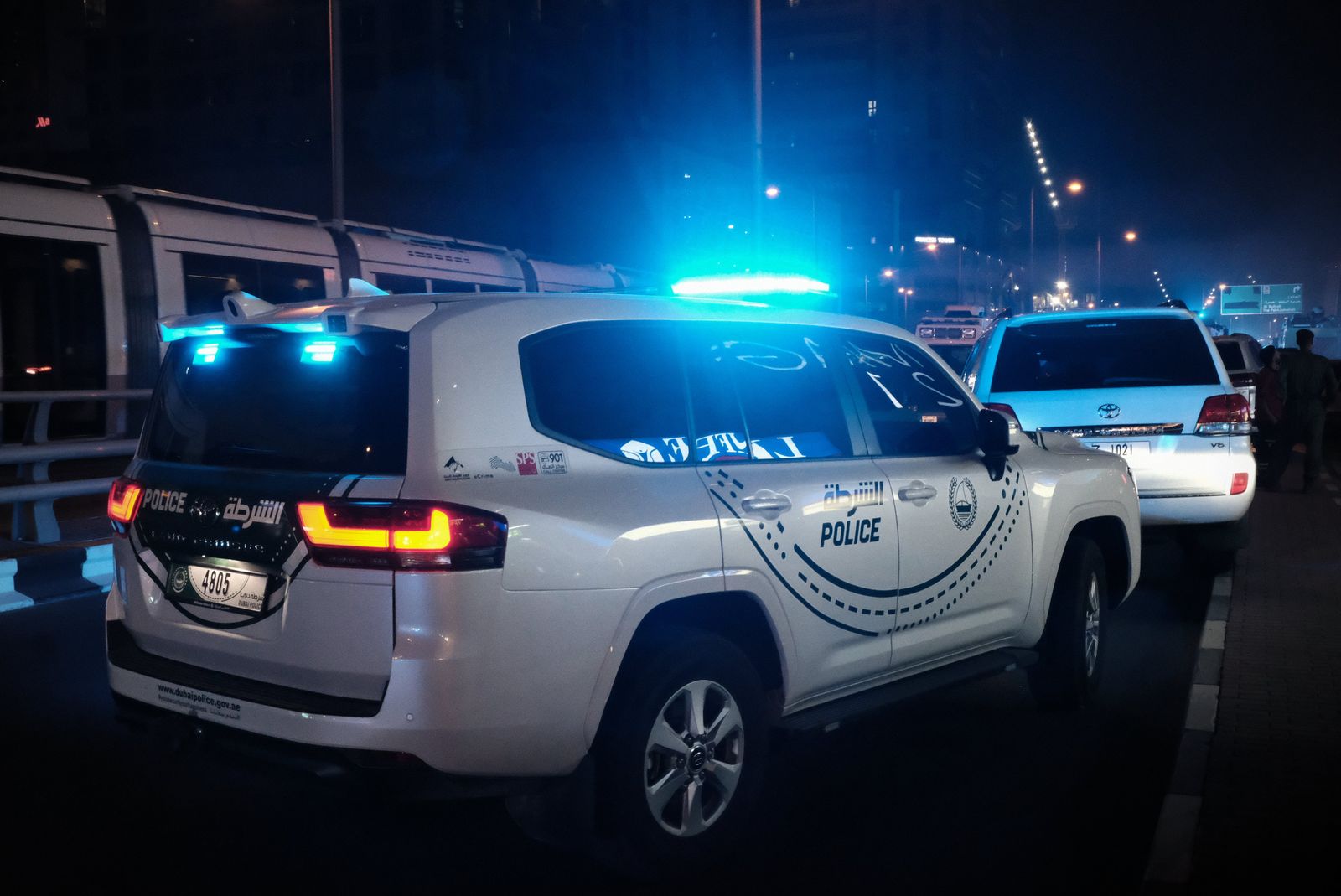
Most trips to the UAE pass without a single call to the authorities, but the few minutes after something goes wrong matter. This page puts every number a visitor needs in one place, explains when to use each, and covers what to do after the call. For the wider picture on crime, laws and scams, read our UAE safety guide. We also keep the Dubai Police site and the UAE government safety portal handy for official updates.
The numbers to save before you land
| Service | Number | Use it for |
|---|---|---|
| Police | 999 | Crime in progress, serious accidents, threats |
| Ambulance | 998 | Medical emergencies, collapse, serious injury |
| Fire and Civil Defence | 997 | Fires, building emergencies, rescue |
| Coastguard | 996 | Emergencies at sea, boats in trouble |
| Search and rescue | 995 | Missing or stranded people, including desert and mountain |
| Dubai Police non-emergency | 901 | Minor incidents, lost property, tourist police help |
| Abu Dhabi Police (Aman) | 800 2626 | Non-emergency police advice in Abu Dhabi |
These are the same in every emirate. Calls are free from any phone, including a foreign SIM roaming on a local network. Save them under clear contact names before you arrive, and read the number back to a travelling companion so more than one person knows it.
Official numbers are published on the UAE government portal at u.ae under “Handling emergencies”, which is worth a bookmark in case anything changes.
999 or 901: which police number?
The split is simple. If someone is in danger, a crime is happening now or there is a serious road accident, call 999. If you have lost a passport, had a bag stolen after the fact, or need advice, call 901 in Dubai. Calling 999 for a non-urgent matter slows the line for real emergencies, and operators will redirect you.
Tourist police
Dubai has a dedicated Tourist Police unit that deals with visitor problems and speaks English and other languages. Reach it through 901, or by email at touristpolice@dubaipolice.gov.ae. Officers are often visible at major attractions, beaches and malls. For theft, a scam or a dispute with a taxi or hotel, they are usually the quickest route to a police report, which you will need for an insurance claim.
In Abu Dhabi, the Aman service (800 2626) takes non-emergency police calls, and SMS reports go to 800 2828. Other emirates run their own police operations, and 999 works everywhere.
Apps that help in a real emergency
- Dubai Police app and eCrime: report incidents and non-urgent crimes online without visiting a station, useful for lost property or theft reports for insurers.
- AD999 (Abu Dhabi Police): an SOS button sends your location and lets you request police, ambulance or fire help.
- DCAS SOS (Dubai Corporation for Ambulance Services): request an ambulance from your phone with your location attached.
Download whichever matches your base before you travel, and allow location access. If your phone is on a roaming plan with patchy data, an eSIM for the UAE keeps maps and apps working.
Hospitals and medical help
Medical standards in Dubai and Abu Dhabi are high, and English-speaking doctors are normal. In an emergency, the ambulance (998) takes you to the nearest suitable facility, public or private. Key points:
- Say your insurance status early. Private hospitals may ask for a deposit or insurer guarantee before treatment that is not life-threatening. Life-threatening cases are treated first.
- For minor illness, a hotel concierge can book a doctor visit or a clinic. Many malls also have walk-in clinics.
- Heat illness is the common emergency. Dizziness, confusion, cramps and heavy sweating in summer need shade, water and a cool room immediately. If the person is confused or stops sweating, call 998.
- Pharmacies are plentiful and many in Dubai and Abu Dhabi are open late or around the clock. Bring a copy of any prescription and the generic name of your medicine, because some drugs sold freely elsewhere are controlled in the UAE.
Road accidents
If there is injury, call 999 and 998. For a minor collision with no injury, move the cars if safe, take photos and call 901 in Dubai, or the local police line elsewhere, to obtain an accident report. Rental car companies will need the report. If you are renting, read our guide to renting a car in the UAE before you drive off.
Lost passport or serious trouble abroad
Report a theft to the police first to get a report, then contact your embassy. Our embassies and consulates guide covers where the main missions are and what they can and cannot do. Consular staff can issue emergency travel documents, contact family and suggest local lawyers, but they cannot pay fines or override local law.
If you are detained, ask to contact your embassy straight away and stay calm and cooperative. Legal risks differ from home, particularly around alcohol, drugs, public behaviour and online posts.
Travel insurance: the safety net
Treat insurance as part of the emergency plan, not an afterthought. Check that your policy covers:
- Emergency medical treatment and evacuation, with a high limit.
- Hospital deposits or direct payment guarantees.
- Theft, lost passport replacement and delayed baggage.
- Any activity you plan, such as desert driving, skydiving or diving.
Keep the insurer’s 24-hour assistance number and policy number in your phone and on paper. Call the insurer as soon as possible after a hospital admission, because many policies require notification within a set time. Our UAE travel insurance guide explains what to look for, and you can compare cover through VisitorsCoverage travel insurance.
Quick checklist before you fly
- Save 999, 998, 997 and 901 in your phone.
- Install AD999 or DCAS SOS and test location permission.
- Photograph your passport and UAE entry stamp or visa and store copies offline.
- Note your hotel address in English and Arabic.
- Carry your insurance details and any chronic medication in original packaging.
Numbers and services can change, so confirm them on the official government and police sites as of 2026 before relying on a rarely used line.