Food to Try in Dubai: What to Eat and Where (2026)
Book an experience
Things to do here
The top-rated tours and activities here — all with instant confirmation and free cancellation on most bookings.
Dubai’s food scene is one of the most diverse in the world — more than 200 nationalities live here, and the restaurant landscape reflects that. But if you want to understand the food that defines the city rather than simply eating what you’d find at home, the dishes below are worth making a deliberate trip for.
Shawarma — Dubai’s Essential Street Food
If you eat one thing in Dubai, make it shawarma. Slow-roasted chicken or lamb on a vertical spit, shaved and folded into flatbread with garlic sauce (toum), pickled vegetables, and sometimes fries or Arabic cheese. The best versions come from small Lebanese-run stalls rather than fast-food chains.
Where to eat it: The Deira and Karama areas have the highest concentration of quality shawarma shops. Al Safadi (Oud Metha) runs a full Lebanese spread including excellent shawarma; the counter service version is AED 10–15. Shawarma Al Safeer (Al Karama) is a local institution with a wrap that consistently wins Dubai food polls at AED 7–10.
Al Reef Lebanese Bakery, with several branches across the city, does a reliably good version at AED 6–9 and is easy to find in most neighbourhoods.
Mezze — The Shared Starter Spread
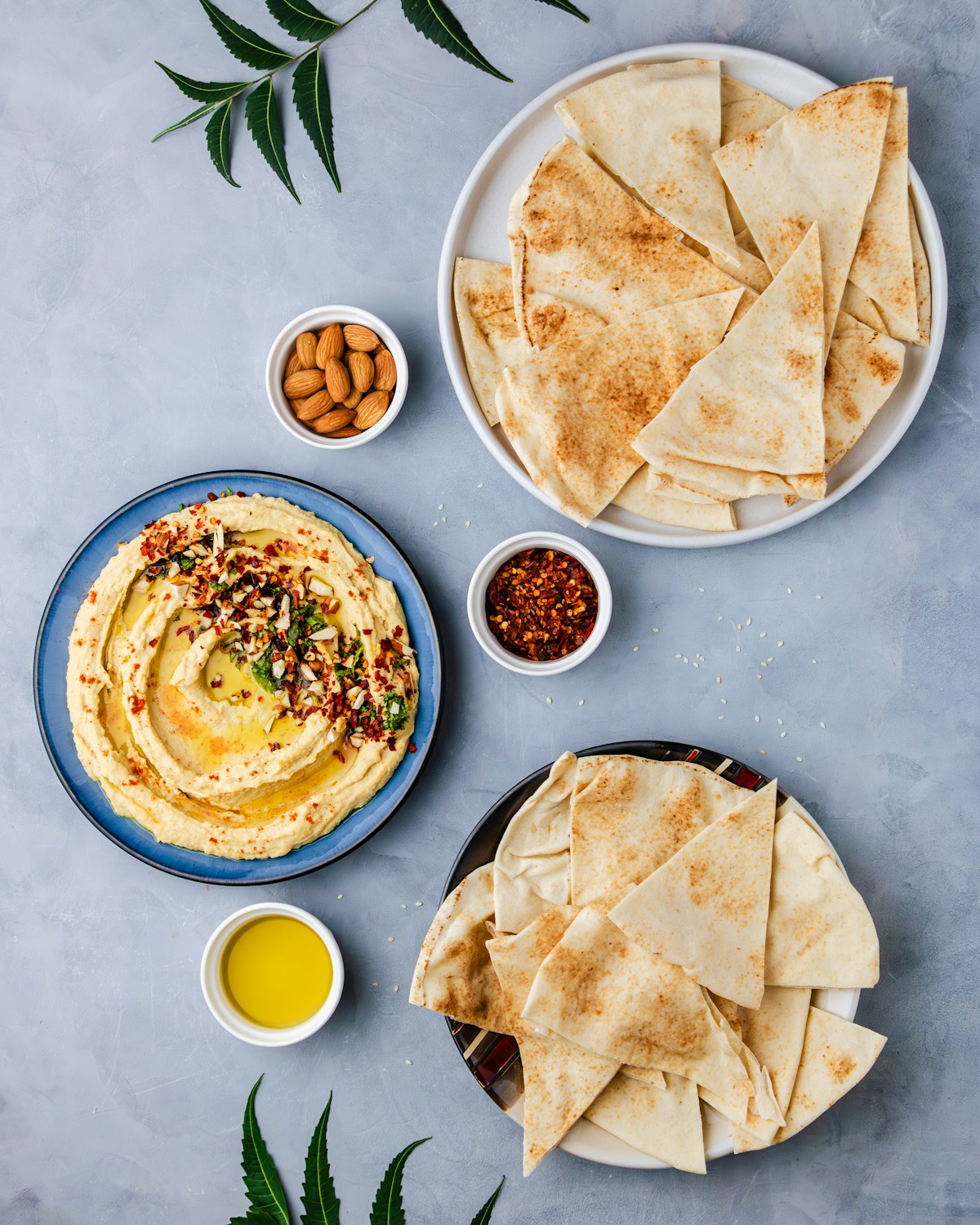
Mezze is the collection of small dishes that begins any proper Middle Eastern meal — hummus (chickpea purée with tahini and olive oil), mutabbal (smoky aubergine dip), fattoush (bread and vegetable salad), tabbouleh (herb and bulgur wheat), kibbeh (spiced meat croquettes), and stuffed vine leaves. Ordering a mezze spread with four people is the best way to eat in Dubai.
Where to eat it: Lebanese restaurants throughout Jumeirah and Deira. Zahr El-Laymoun (Jumeirah Beach Road and DIFC) runs a popular Lebanese mezze spread — expect AED 20–35 per mezze dish and AED 250–400 for a full table spread for four. Bait Al Wakeel (Dubai Creek area) is a more atmospheric option with creek views; similar pricing.
For a straightforward inexpensive version, Lebanese bakery restaurants in Deira serve complete mezze spreads for AED 60–120 for two people.
Al Machboos — The National Rice Dish
Al machboos (also spelled machbous) is the UAE’s closest equivalent to a national dish. Spiced rice slow-cooked with chicken, lamb, or shrimp and seasoned with loomi (dried lime), turmeric, cinnamon, and rosewater. It is similar in appearance to biryani but the spicing is distinctly Gulf — more aromatic and less hot.
Where to eat it: Al Fanar Restaurant & Café (Festival City Mall and Golden Mile Galleria, Palm Jumeirah) serves one of the most widely recommended versions in the city, from approximately AED 65–80 as of 2026 for a main course. Logma (Box Park Jumeirah) offers a more casual setting with a smaller machboos portion from AED 45.
Karak Chai — The UAE’s Daily Drink
Karak is strong black tea brewed with evaporated milk, cardamom, and often saffron or ginger. It is the daily caffeine anchor for much of Dubai’s South Asian workforce and increasingly popular with everyone else. A cup costs AED 1–4 from any roadside kiosk or small café.
Where to drink it: Karak House (multiple locations) has standardised the format for tourists but any small Pakistani or Indian café in Bur Dubai or Deira will serve the same drink for AED 1–2. The quality is indistinguishable. For a special version, Arabian Tea House (Al Fahidi area) does a cardamom-heavy version alongside traditional Emirati snacks from AED 22.
Fresh Seafood — The Gulf on a Plate
Dubai is a port city and the Gulf seafood is genuinely excellent. Hamour (grouper), kingfish, sea bream, prawns, and crab are all local. The best value approach is to buy fish from Deira Fish Market and have it grilled on-site by the vendors — prawns cost approximately AED 30–60 per kilogram, hamour approximately AED 40–80 per kilogram as of 2026.
For a restaurant experience, Bu Qtair (near the Jumeirah Fishing Harbour) is legendary for its fried fish and shrimp in a no-frills setting with plastic chairs and a queue out the door — a full meal for two costs approximately AED 60–100 as of 2026 and it is as good as anything costing five times the price.
At the higher end, Pierchic (Jumeirah Al Qasr hotel) serves fresh Gulf seafood with views over the Arabian Gulf — expect AED 300–500 per person for a full meal.
Luqaimat — Sweet Street Dumplings
Luqaimat are small, deep-fried dough balls drizzled with date syrup (dibs) and sesame seeds. Crispy outside, soft inside, aggressively sweet. They are sold from carts at traditional markets and souks, particularly during Ramadan, for AED 5–15 for a portion.
Where to find them: Global Village (when in season, October–April) always has multiple luqaimat vendors. Outdoor food markets in Jumeirah and Heritage Village in Al Shindagha also carry them year-round. Al Ustad Special Kabab (Bur Dubai) often sells luqaimat alongside its main menu.
Where to Eat Cheaply in Dubai
Dubai has a justified reputation for expensive dining but it also has genuinely cheap options that locals rely on daily:
- Ravi Restaurant (Satwa): Pakistani curries, nihari, and grills from AED 15–40 per dish. Open since 1978 and one of the most consistently recommended budget restaurants in the city.
- Deira covered souq area: Multiple Pakistani, Indian, and Filipino restaurants serving full plates for AED 10–30.
- Al Karama: Dense with South Asian, Filipino, and pan-Asian restaurants at AED 20–50 per head.
Fine Dining Worth the Splurge
If budget is not a constraint, two restaurants stand out in Dubai’s crowded fine dining market:
- Nobu Dubai (Atlantis The Palm): Japanese-Peruvian fusion, consistently ranked among the best dining experiences in the UAE. Set menu from approximately AED 450 per person as of 2026.
- Torno Subito (W Dubai The Palm): Massimo Bottura’s Italian trattoria concept — pasta from AED 95, mains from AED 130. Livelier and more informal than Nobu but equally reliable.
For the full food scene — restaurant reviews by neighbourhood, brunch guide, and the best places for vegetarian and vegan food — see our Dubai food guide.
Frequently Asked Questions
- What is the most popular street food in Dubai?
- Shawarma is the most ubiquitous. Lebanese-run shawarma stalls in Deira and Karama consistently produce the best versions — chicken or lamb shaved from a rotisserie spit, wrapped in flatbread with garlic sauce and pickles. Expect AED 5–15 as of 2026. Luqaimat (deep-fried dumplings with date syrup) are the most common sweet street food, particularly during Ramadan.
- Where can I eat Emirati food in Dubai?
- Emirati cuisine is available at a handful of specialist restaurants. Al Fanar Restaurant & Café (Festival City Mall and Palm Jumeirah) is the most accessible option — mains from AED 55–90 as of 2026. Logma (Box Park, Jumeirah) is a café-format Emirati spot with traditional breakfasts and lighter dishes from AED 30–60. Arabian Tea House (Al Fahidi Historical Neighbourhood) is better for the setting than the food but gives good context.
- What is the cheapest good food in Dubai?
- Deira and Bur Dubai have Dubai's best value food. Pakistani and Indian restaurants in Deira serve full meals for AED 15–35 as of 2026. Ravi Restaurant (Satwa) is the city's most famous cheap eat — Pakistani curries and grills from AED 15–40. Shawarma kiosks throughout the city serve one of the better cheap snacks anywhere in the Gulf for AED 5–12.
Ready to explore?
Browse hundreds of tours and activities. Book securely with free cancellation on most options.
Browse on GetYourGuide →Best price guaranteed — same price as booking direct. We earn a small commission at no extra cost to you.