The UAE welcomes around 17 million tourists a year, and the vast majority have a seamless, enjoyable visit. That said, this is a Muslim-majority country with its own distinct legal framework and social norms that differ considerably from Western defaults. Getting these basics right costs nothing and shows genuine respect for your hosts.
Dress Codes: The Quick Guide
The UAE’s dress code sits between what most Westerners expect at home and what is required in more conservative Gulf states. The key principle: cover up as you move away from the beach or pool.
At beaches and pool areas, swimwear is fine. JBR Beach in Dubai, Saadiyat Beach in Abu Dhabi, and Kite Beach all see tourists in standard swimwear. Toplessness is not permitted, even at private hotel pools. As soon as you leave the beach strip and enter a hotel lobby, put a cover-up on.
In malls and public spaces, shoulders and knees should be covered. This is not strictly enforced as a hard rule at tourist malls like The Dubai Mall or Mall of the Emirates, but it is expected. Ripped clothing and anything with offensive graphics or slogans should stay in the hotel room.
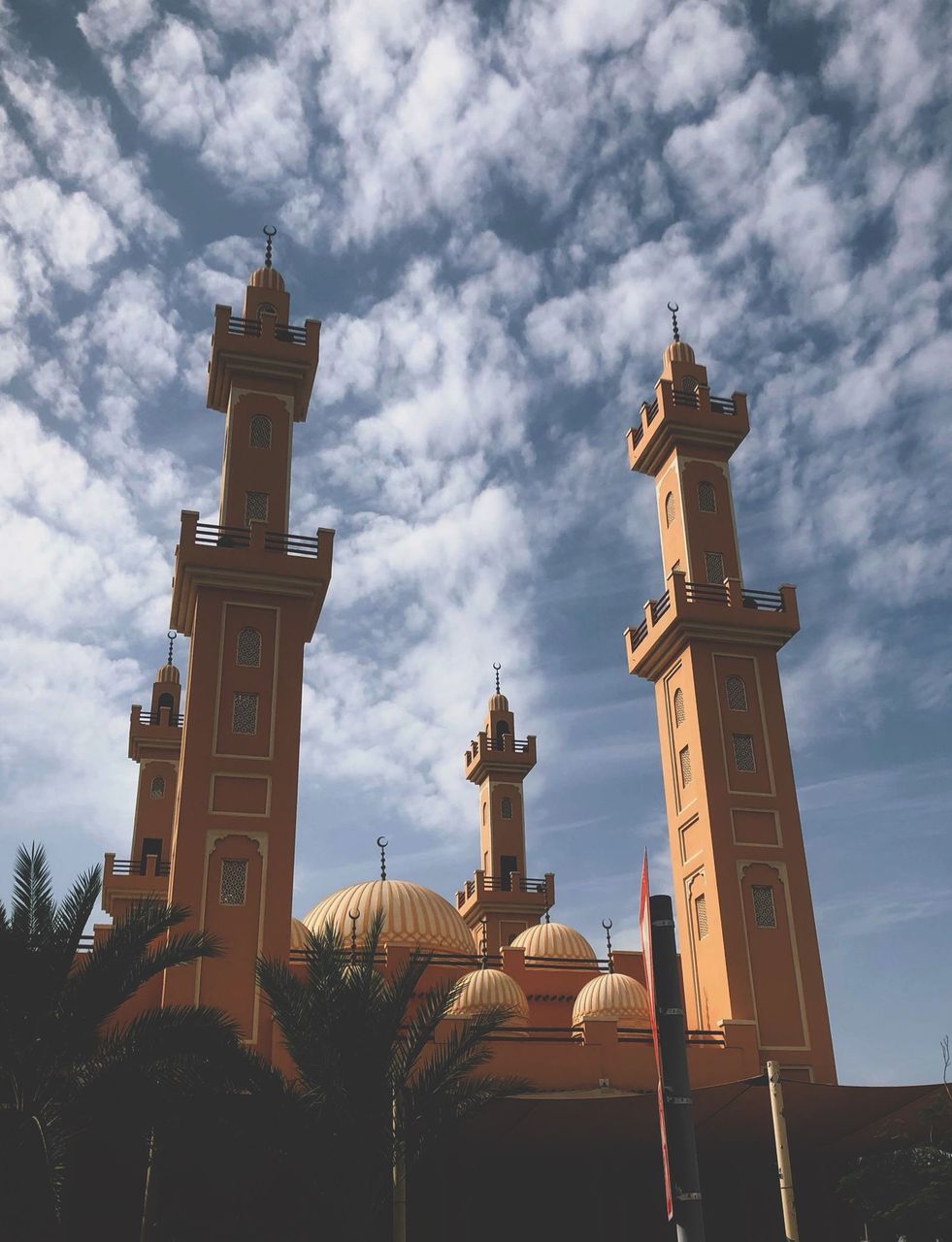
At mosques and religious sites, the rules are firm. Women must cover their hair, arms, and legs; many mosques provide abayas at the entrance. Men must wear long trousers and a top with sleeves. Sheikh Zayed Grand Mosque in Abu Dhabi has staff at the gate who will turn away visitors dressed inappropriately; they do lend out suitable clothing, but planning ahead avoids the queue. Al Fahidi Historical Neighbourhood (Bastakiya) in Dubai has a similar requirement.
Sharjah has stricter standards than Dubai or Abu Dhabi. Shorts and sleeveless tops in public areas will attract attention, and Sharjah’s alcohol ban extends to a generally more conservative atmosphere overall.
For a full breakdown by venue type, including specific guidance for each emirate and what to pack, see our UAE dress code guide.
Tipping Culture
Service charges of 10% appear on many restaurant bills across the UAE, particularly at mid-range and upscale venues. That charge goes to the venue, not always to the server, so an additional tip is appreciated.
A rough guide:
- Restaurants: 10-15% if no service charge is included; AED 15-30 at upscale venues even if a charge is already listed
- Taxis and ride-hailing: rounding up to the nearest 5 or 10 AED is customary; Uber and Careem do not expect tips
- Hotel staff: AED 5-10 for bellboys, AED 10-20 for concierge assistance with restaurant bookings or reservations
- Delivery drivers: AED 5-10 per delivery is common
- Spas and salons: 10-15%, whether at a hotel spa or a standalone salon
You do not tip at fast food counters, supermarket checkouts, or self-service settings. For a detailed breakdown including specific venues and when tipping is expected versus optional, read our tipping in Dubai guide.
Greetings and Social Customs
The standard Arabic greeting is “As-salamu alaykum” (peace be upon you), with the response “Wa alaykum as-salam”. Using it when meeting someone, even briefly in a shop, is always well received. “Marhaba” (hello) and “Shukran” (thank you) are also universally appreciated.
Handshakes between men are common. However, when greeting someone of the opposite sex, do not extend your hand first unless they offer theirs. Some Emirati women and men decline to shake hands with the opposite gender for religious reasons; follow their lead. A slight nod or a hand on the heart is a respectful alternative.
When meeting Emirati men, you may notice they greet each other by touching noses (a traditional Emirati greeting called the “nose kiss”). This is a private greeting between locals and not something visitors should attempt to replicate.
Business cards, gifts, and food should be offered and received with the right hand or both hands. Passing anything with only the left hand is considered rude.
Photography Rules
Dubai and Abu Dhabi are among the most photogenic cities in the world, and photography is actively encouraged at landmarks like the Burj Khalifa observation deck, the Sheikh Zayed Grand Mosque, and Al Fahidi Fort. However, several clear rules apply:
- Never photograph people without asking first, particularly Emirati men and women in traditional dress
- Women in abaya or niqab often decline to be photographed; respect this without discussion
- Photographing police stations, military bases, royal palaces, and border checkpoints is illegal and can result in confiscation of your device and arrest
- At the Gold Souk in Deira, many traders have “no photography” signs; observe them
- In malls, photography rules vary by venue; asking staff before shooting is good practice
At tourist attractions like the Dubai Frame or the top of Burj Al Arab, photography is not only permitted but expected.
Bargaining
Bargaining is appropriate at traditional souqs: the Gold Souk, Spice Souk, and Textile Souk in Deira are the main venues where it is expected. A reasonable opening counter-offer is 40-60% of the stated price; you will usually settle somewhere in the middle. Shopkeepers enjoy the process and will not take offence at a reasonable counter.
Do not attempt to bargain in malls, chain stores, supermarkets, or restaurants. Fixed pricing is the norm everywhere outside traditional markets.
Religious and Cultural Sensitivities
Islam structures daily life in the UAE in ways that are visible to visitors. The call to prayer (adhan) sounds five times a day from mosque loudspeakers across every emirate. When you hear it, lower your speaking volume in public if you are near a mosque.
Ramadan changes the rhythm of the entire country for approximately one month each year (the date shifts annually with the Islamic lunar calendar; in 2025 it fell in late March through April). During Ramadan:
- Eating, drinking, and smoking in public during daylight hours is prohibited, including chewing gum
- Restaurants open from sunset; hotel restaurants and some licensed venues serve non-Muslim guests behind screened-off areas during the day
- Music is restricted in public spaces; many venues lower the volume
- Working hours shorten; expect slower service
- Dressing more conservatively than usual is expected even in tourist areas
Eid Al Fitr and Eid Al Adha, the two major Islamic holidays, are celebratory occasions when many businesses close. Visiting a souq during Eid can be a memorable cultural experience; see our Ramadan in UAE guide and Eid Al Fitr guide for the full picture.
Friday is the Islamic holy day. Government offices and many traditional businesses are closed or operate on shortened hours on Friday morning; everything picks up again from Friday afternoon. Most tourist attractions, malls, and restaurants operate normally throughout.
Dining Etiquette
The UAE’s restaurant scene spans every price point and cuisine, with few formal rules beyond what you would follow at home. A few points worth knowing:
Alcohol is served in licensed venues: hotels, certain standalone restaurants with a liquor licence, and private members clubs. You will not find alcohol at most local Emirati restaurants, in Sharjah at all (the emirate is dry), or in any venue without a licence. Drinking in public or arriving visibly intoxicated at a venue is illegal.
Halal food is standard: pork is not available at most restaurants, though it can be found in some hotel restaurants and licensed supermarkets in designated sections. All other meat served in the UAE is halal by default.
At Emirati and Middle Eastern restaurants, bread and communal dishes are often shared from the centre of the table. It is polite to wait for the host to begin. If someone insists you eat more, a firm “shukran, I am full” is accepted gracefully.
Arabic coffee (gahwa) is offered at cultural centres, majlises, and traditional venues. Accept with the right hand and hold the cup until it is refilled or until you gently shake it side to side to signal you have had enough. Refusing it entirely is considered mildly impolite in a formal setting.
Behaviour in Emirati Homes
If you are invited into an Emirati home, it is a mark of genuine hospitality. A few customs apply:
- Remove shoes at the door unless the host specifically tells you not to
- Dress modestly; women should cover arms and legs even in a private home
- Men and women may be welcomed in separate rooms (the majlis for men, inner rooms for women); follow the host’s lead
- Refuse food and drink only once; accept on the second offering, as repeatedly declining is considered impolite
- Sit on the floor in a traditional majlis with your legs folded or to the side; never point the soles of your feet toward other guests or toward a prayer rug
- Do not bring alcohol as a gift; dates, sweets, or high-quality coffee are appreciated
- Compliment the home without pointing at specific objects, as the host may feel obliged to offer the item to you
Conversations may open with extended enquiries about your family, health, and wellbeing before moving to other topics. This is genuine hospitality, not small talk; engage with it rather than steering quickly to business.
A Few Final Points
The UAE has a zero-tolerance policy on drugs. Importing prescription medications that are controlled substances in the UAE requires prior approval from the Ministry of Health. Carry documentation for any prescription drugs in your luggage.
Public intoxication, swearing in public, and making obscene gestures (including gesturing with a middle finger while driving) are criminal offences with real legal consequences.
By and large, the UAE is an exceptionally visitor-friendly country. These norms are not obstacles; they reflect a host culture that values hospitality, respect, and order. Visitors who engage with them rather than around them consistently report a richer, more memorable trip.