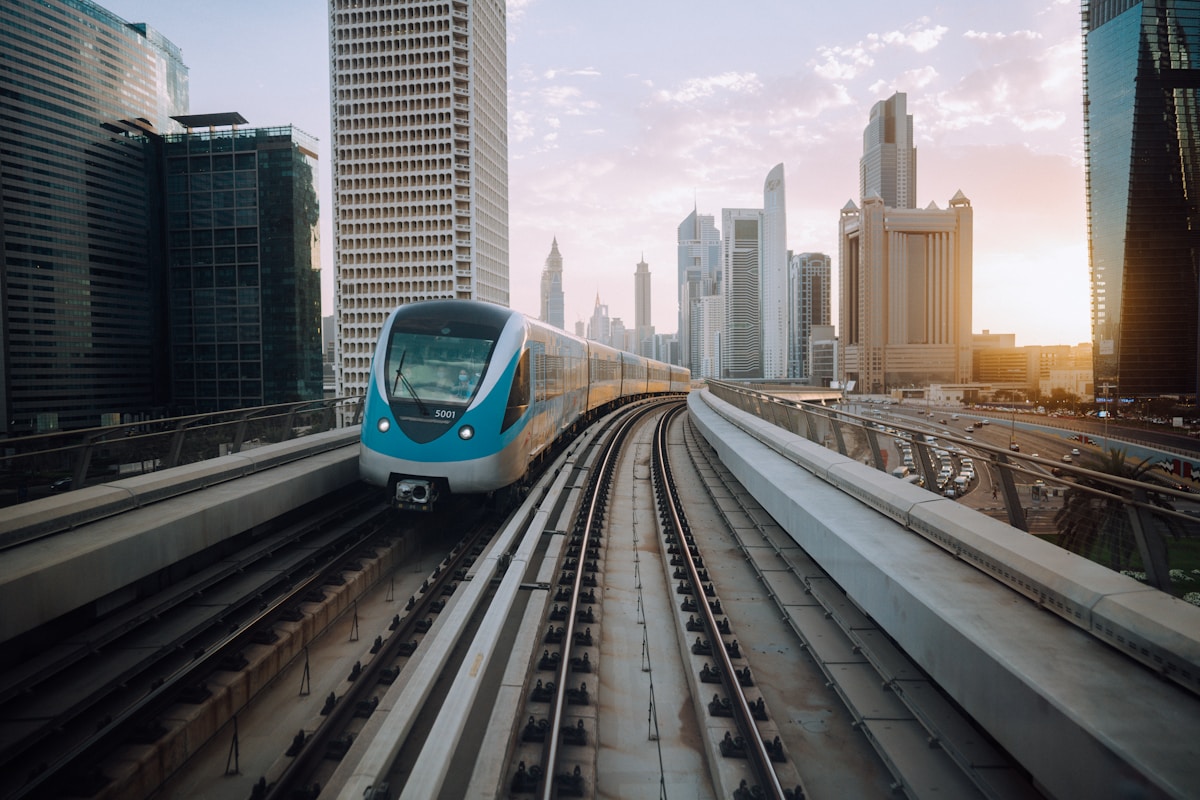
Etihad Rail’s passenger service began on 30 June 2026 between Abu Dhabi and Fujairah, and the network opened to Dubai and Al Dhaid on 30 September 2026, becoming the UAE’s first inter-city rail service and connecting four major hubs across the country for the first time. The extended network covers the route from Abu Dhabi through Dubai and Al Dhaid to Fujairah, with trains running daily in both directions.
The service was developed over more than a decade as a state infrastructure project, initially focused on freight before the passenger mandate was added. The June launch marked the first time ordinary travellers could use the rail network.
Routes and fares
The inaugural passenger service runs a single trunk route with stops at:
- Abu Dhabi (Khalifa Port station)
- Dubai (Dubai South station)
- Al Dhaid (Sharjah emirate)
- Fujairah (city station)
Fares are set at:
| Class | Fare |
|---|---|
| Comfort | From Dh55 |
| Premium | From Dh120 |
Journey time from Abu Dhabi to Fujairah is approximately two hours, compared to around three hours by road in typical traffic conditions. The Abu Dhabi–Dubai leg takes roughly 50 minutes on the rail timetable.
Tickets can be booked through the Etihad Rail app and website, with physical ticket counters at each station.
What this means for travellers
The route connects Dubai and Abu Dhabi - the two cities most visitors use as base - with Fujairah on the east coast, which has historically been time-consuming to reach from the main tourist centres. A day trip to Fujairah’s beaches, diving sites and Al Bidyah mosque, previously requiring a dedicated hire car or expensive taxi, becomes more accessible from both emirates.
Al Dhaid is a smaller town in Sharjah emirate known for its fruit and vegetable souq and as a staging point for inland Sharjah attractions; it is less relevant for most international tourists but provides useful connectivity for residents.
For those already familiar with getting around the country, our full Etihad Rail guide covers station locations, booking, luggage rules, and how to connect between the train and metro at the Dubai South station.
Freight context
Etihad Rail has operated a freight network since 2016, carrying aggregates, sulphur and other bulk materials. The passenger service runs on dedicated passenger infrastructure rather than on freight-only lines, with a maximum speed of 200 km/h on the main sections.
Further route expansions - including a western extension toward the Saudi border - are planned but have no confirmed launch date as of this article.